
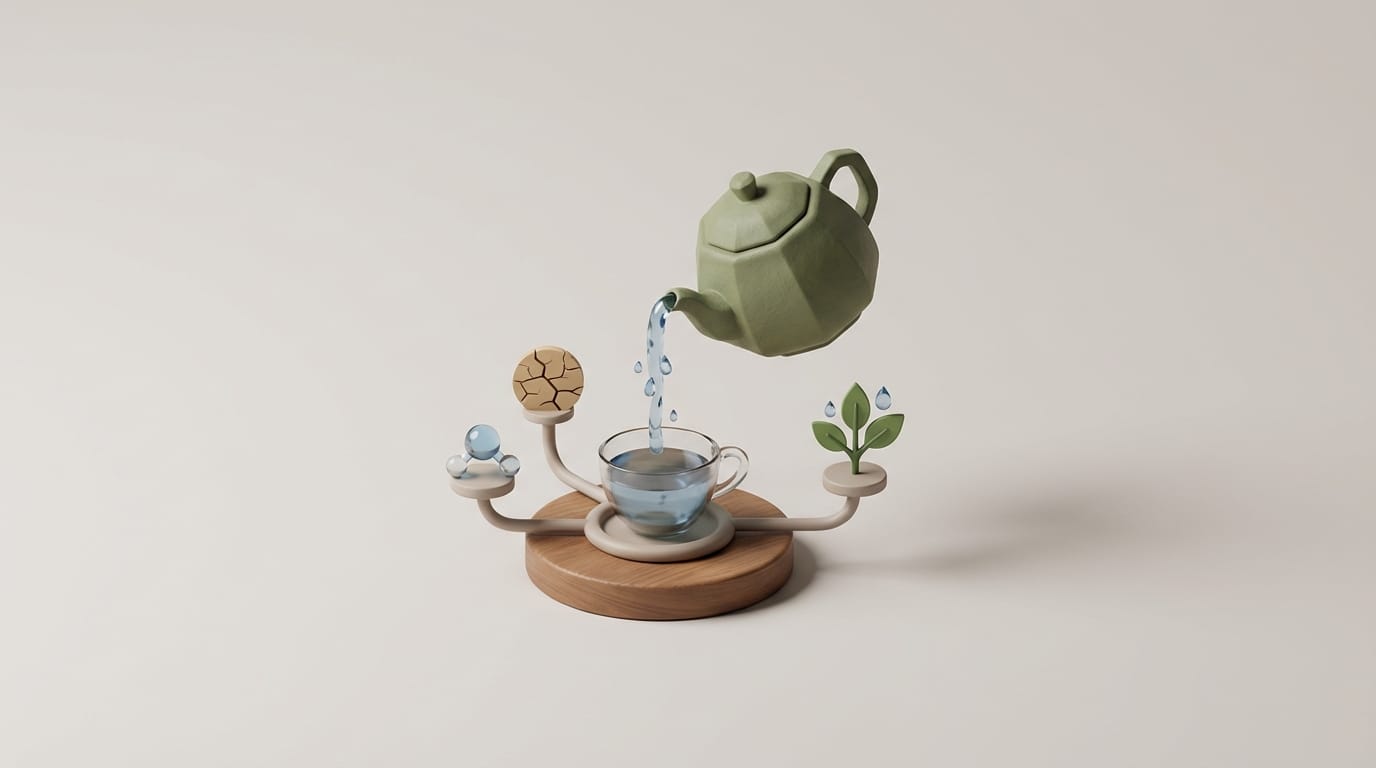
Many people worry that the caffeine content means does tea dehydrate you by draining your fluid reserves, but the science tells a different story. Tea is mostly water. While caffeine can have a minor effect on how much you urinate, the volume of liquid in each cup far outweighs any small loss. For most drinkers, tea helps you stay hydrated and contributes to your daily fluid goals without the net loss many people fear.
To understand why this myth lasts, think of your body as a system of inputs and outputs. When you drink a cup of tea, your body processes the water and the caffeine through different paths. Since tea is over 99 percent water, the input is high. The output caused by caffeine is a short, local response that rarely beats the fluid you just gained. Misunderstanding these systems leads to poor health choices, like avoiding tea when you need fluids most. Knowing the difference between a mild diuretic and a dehydrator helps you plan your hydration better.
The Science Behind Caffeine and Why Does Tea Dehydrate You?
The main reason people ask does tea dehydrate you is because of caffeine. This natural stimulant interacts with your renal system. To the kidneys, caffeine acts as a mild diuretic, which is a substance that makes the body release more sodium into the urine. This sodium pulls water with it, leading to a brief increase in how often and how much you urinate.
How caffeine interacts with the kidneys
Caffeine works by blocking the antidiuretic hormone (ADH), which tells your kidneys to soak up water back into the blood. When caffeine slows this signal, the kidneys let more water pass into the bladder as waste. This effect happens only shortly after you drink it and does not mean your whole system is losing fluid balance. The body maintains its steady state easily because the caffeine levels in tea are relatively low.
The difference between a diuretic and a dehydrator
A diuretic increases the rate of urination, but a dehydrator would mean you lose more fluid than you actually drank. Fear about tea often comes from old studies that used high doses of caffeine pills. When you take caffeine alone, it is a strong diuretic. When you dissolve it in eight ounces of water, the fluid balance stays positive. This confusion is common in health science, much like the myth that camel humps store liquid water when they really store fat for energy.
How the Water in Tea Offsets Diuretic Effects
The body is great at keeping a steady balance, and the water in a cup of tea is ready for your cells to use. Because tea is flavored water, the diuretic effect of caffeine cannot compete with the large volume of liquid. If you drink 250ml of tea, the caffeine might cause you to lose a few extra milliliters of urine, but you still gain over 240ml of net fluid. The math favors hydration every time.
Measuring the net fluid balance of a cup of tea
Researchers have tested how black tea compares to plain water for hydration. A study published in the British Journal of Nutrition looked at healthy men and found no big differences in blood or urine markers between those who drank tea and those who drank water, according to the randomized controlled trial results. The body treats tea as a source of H2O, and the caffeine acts as a minor tax on the transaction rather than a total loss of fluid.
Why tea acts like plain water for hydration
The small increase in urine after a cup of tea is no different than what happens after drinking a large glass of water. Both trigger the body to release pressure. Since tea usually has only 30 to 70mg of caffeine, the urge to urinate is gentle and does not ruin your fluid status. This makes tea a great tool for optimizing post-workout recovery through system synergy, where you need steady fluids to help tissues heal.
Identifying the Tipping Point for Real Dehydration
While moderate tea drinking is hydrating, there is a point where caffeine could move faster than fluid intake. High-performance people who drink tea for focus should know where this limit sits. Most studies show that the diuretic effect only becomes a real concern when caffeine intake goes over 500mg in one sitting.
The threshold of 6 to 13 cups of caffeinated tea
To reach a level that causes serious fluid loss, you would need to drink between 6 and 13 cups of tea one after another. At that level, the caffeine in your blood becomes high enough to stop ADH and make the kidneys dump water faster than the body can take it in. For the average person drinking two or three cups during the day, this never happens. The body processes the moderate amount of caffeine long before the next cup arrives.
What happens when caffeine intake exceeds 500mg daily
Crossing the 500mg daily mark moves you from a minor fluid shift to a drug-like effect. Doses this high can cause a short-term jump in urine volume that might lead to mild dehydration if you do not drink other fluids, as detailed in meta-analyses of caffeine and fluid balance. This is a temporary effect. The body usually finds its balance again within four to six hours once the caffeine leaves your system.
Hydration Differences Across Varieties
Nature does not make all teas the same. The way makers process the leaves changes the chemical makeup and how well the tea hydrates you. If you are sensitive to stimulants, picking the right type helps you keep your fluid balance. Black tea often has more caffeine, yet it still helps you stay hydrated. Green and white teas have less caffeine and contain L-theanine, which helps the body handle caffeine more smoothly.
In practice, green tea acts almost exactly like plain water because the stimulant load is light. This variety lets you choose your tea based on your needs, much like how you might use athletic recovery science to find the best way to rest. Herbal infusions like peppermint or chamomile are even simpler. They have zero caffeine and are biologically the same as water for hydration. They do not trigger the kidneys to release extra water at all, making them the most efficient choice for pure hydration.
Why Regular Drinkers Develop Caffeine Tolerance
The human body is great at adapting to what we give it. If you drink tea every day, your body does not react to caffeine the same way a new drinker’s does. Your kidneys and brain develop a tolerance that slows down the diuretic response. For someone who enjoys tea daily, the answer to does tea dehydrate you is a firm no because the body has learned to expect the caffeine.
Studies show that the diuretic effect can almost disappear in as little as five days of steady drinking. The system stabilizes, and the body learns to manage the stimulant without losing excess water. This biological efficiency ensures that your favorite drink remains a good source of fluid over the long term. It shows why your own habits matter more than general advice when tracking how your body feels.
Optimizing Your Daily Fluid Intake with Tea
Adding tea to your day is a simple way to meet your hydration goals while getting antioxidants. You do not need to follow strict water-only rules. Instead, watch your body’s signals rather than worrying about the chemistry of your drink. Spreading your tea throughout the day prevents caffeine spikes that might hit the 500mg limit. Also, try to limit heavy sugar or honey, as they can change how fast your body absorbs water. Plain tea or tea with a little milk stays the most hydrating choice.
The best way to know if your tea is working is to check your urine color. If it is pale yellow, you are well-hydrated. If you feel tired or have a dry mouth, you just need more total fluid. You do not have to give up your tea; you just need more water in your system overall. Modern science shows the body is strong enough to handle moderate caffeine without losing its balance. As long as you are not drinking ten cups at once, your daily tea is helping your health. It is a functional tool for both a clear mind and a hydrated body.