
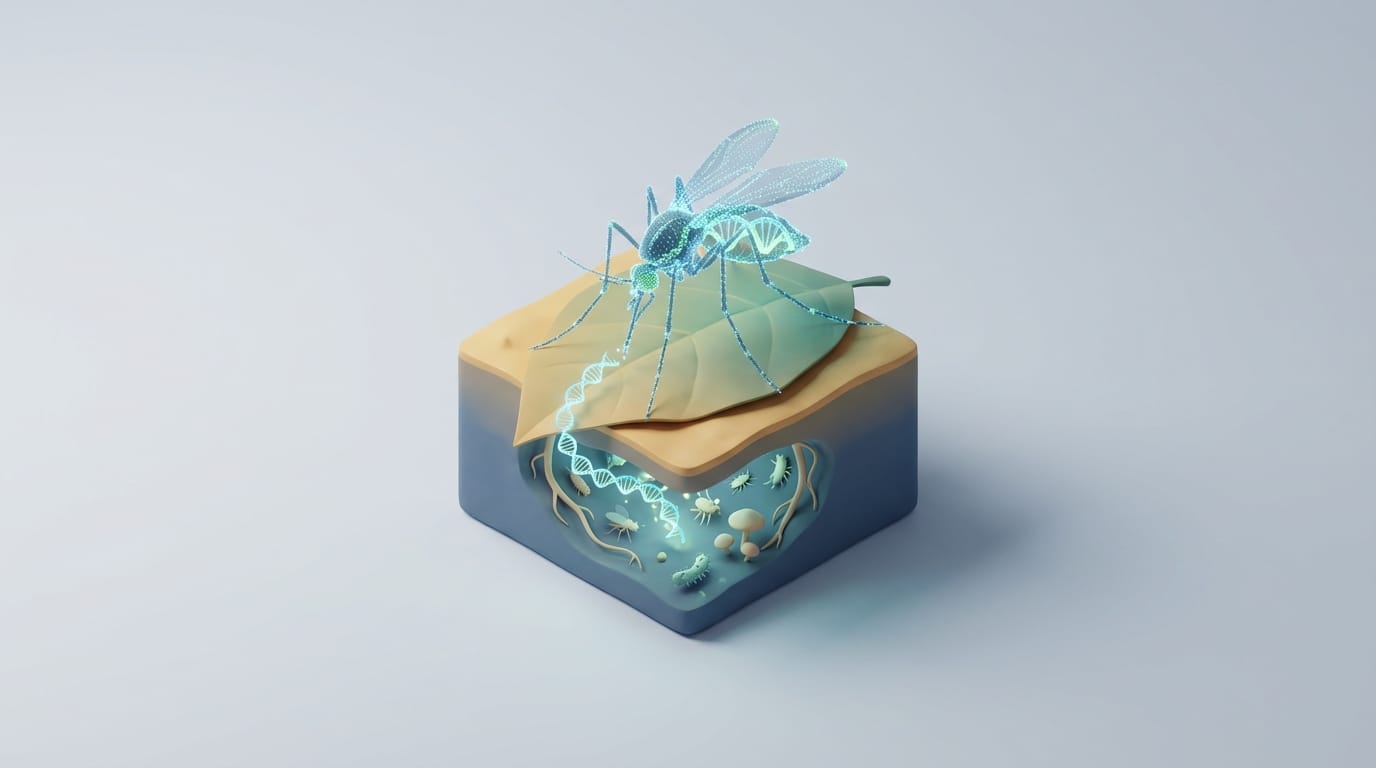
The mosquito buzzing in your backyard is more than a pest. It acts as a high-resolution biological surveyor that carries a 48-hour genetic snapshot of every animal nearby. By analyzing mosquito dna biodiversity, scientists can see exactly which creatures shared your space over the last two days. This process moves beyond science fiction into a fast-growing field of biological tracking that changes how we view the natural world.
While traditional wildlife monitoring relies on cameras or labor-intensive physical tracking, mosquitoes act as living syringes. They collect blood from many hosts, including frogs and deer, then store that genetic data in their guts. This system provides a view of local life that once stayed hidden from the human eye. Researchers no longer look for ancient DNA; they focus on the immediate present. By harvesting blood meals from captured insects, experts identify nearly every animal in a garden without ever seeing them.
The Mosquito as a Biological Data Collector
From Pest to Precision Instrument
For decades, society viewed the mosquito as a carrier of disease, but modern genomics turns these insects into sophisticated tools for data collection. Each female mosquito needs a blood meal to produce eggs; in the process, she takes a perfect sample of her host’s DNA. This genetic material, called invertebrate-derived DNA (iDNA), lets scientists avoid the need for invasive traps or the pure luck required for camera sightings. Scientists increasingly see mosquitoes as partners in a systematic census of local life.
This method works because mosquitoes are not picky eaters. While some species target birds and others prefer mammals, the collective catch of a local population reflects a broad cross-section of the community. It turns the insect’s appetite into a survey tool that captures data on shy or rare animals. This process reveals how animal adaptation and evolution led these insects to thrive in almost every niche.
The Mechanics of Invertebrate DNA Sampling
Technical differences separate standard environmental DNA (eDNA) from the iDNA found in mosquitoes. Standard eDNA often comes from water or air, where genetic material might drift for miles or stay for weeks. These factors make it hard to know exactly where or when an animal appeared. In contrast, iDNA remains contained within the insect’s digestive tract as a direct sample from the source. When a mosquito feeds, it draws in host cells that its body begins to digest.
Sequencing these blood meals requires experts to extract the genetic material before enzymes break it down. This process provides a higher concentration of host DNA than a liter of pond water, making the identification of reclusive species more reliable. It creates a biological archive that records the presence of life with high precision. This method shares similarities with real-time monitoring of physiological data used in other fields to track health and environmental changes.
Harnessing Mosquito DNA Biodiversity for Localized Insights
Spatial Accuracy within a Few Hundred Meters
Mapping mosquito dna biodiversity offers a hyper-local view of an environment. Most mosquitoes do not travel far after a blood meal because they are heavy with fluid and seek a nearby spot to rest. Many common species stay within a few hundred meters of their feeding site; a mosquito caught in a backyard likely carries the DNA of an animal that visited that exact yard or its neighbor. This spatial detail exceeds the accuracy of air or water sampling.
While a wolf’s DNA in a river might have come from miles away, a mosquito’s blood meal serves as a local timestamp. Conservationists use this precision to protect wildlife corridors, while urban planners use it to assess how new parks affect local animals. These micro-maps show exactly how creatures navigate areas dominated by humans. Such data helps experts manage the terrain without disrupting the natural flow of life.
The Short Window of Biological Relevance
Genetic material in a mosquito’s gut has a short shelf life and typically fades within two days. While this seems like a limit, it provides a major scientific advantage. Because the DNA disappears fast, its presence guarantees recent activity. This creates a snapshot of a biological system in real-time rather than a historical average. A positive test tells researchers an animal was there within 48 hours, allowing them to track migratory paths and daily routines.
Unlike soil samples that might hold traces from a month ago, mosquito blood meals stay current. This focus on the now makes the system a powerful tool for monitoring immediate changes in a habitat. Experts can see how species respond to sudden shifts in the environment or human activity. It removes the guesswork from biological surveys and replaces it with fresh, verifiable evidence.
Why Temporal Resolution Beats General Biodiversity Maps
Identifying Transient Wildlife Patterns
Standard maps often miss transient species that pass through an area once or stay active only during specific seasons. Mosquitoes do not sleep when humans do; they hunt during twilight and night hours, sampling nocturnal mammals and roosting birds. This lets researchers find owls, flying squirrels, or rare bats that rarely cross a camera’s path. These insects work through the night to provide a complete picture of the biological community.
In a study at the DeLuca Preserve in Florida, researchers detected 86 different species by analyzing mosquito blood meals, according to research published in Scientific Reports. The list included bald eagles, rattlesnakes, and coyotes. This comprehensive detection would normally take years of manual work, yet the mosquitoes finished the task in one season. It demonstrates how these insects serve as a high-fidelity record of their surroundings.
The Limitations of Water and Air Sampling
Air and water eDNA provide a blurred image of an environment. Sunlight, temperature, and water acidity cause eDNA to break down at different speeds, making it hard to estimate when an animal was present. Runoff and wind also contaminate these samples with DNA from distant places. iDNA solves these problems by acting as a protected biological vessel. The host DNA stays shielded inside the mosquito’s body, safe from the sun and wind until extraction.
This protection ensures the data is both local and high-quality. Similar to the complex engineering of bioluminescence in other insects, the mosquito’s feeding system serves a specialized purpose. It accidentally preserves a record of the environment that remains clear and untainted. Researchers can trust that the data they extract reflects the true state of the local habitat.
Mapping the Micro Environments of Urban Backyards
Uncovering Wildlife in Human-Dominated Areas
People often view cities as biological deserts, but iDNA analysis proves otherwise. By sampling mosquito dna biodiversity in city centers, researchers find thriving wildlife paths hidden in plain sight. Foxes, raccoons, and deer move through backyards under the cover of darkness. Mosquitoes record these visits and reveal how closely domestic and wild systems connect. This data helps experts understand how wild species interact with human boundaries.
In many cases, mosquitoes detect protected or invasive species where humans thought they were absent. This allows local governments to make better decisions about pest control and habitat preservation. By knowing which animals move through a neighborhood, cities can protect vital paths that species use to travel between forest patches. It turns every backyard into a potential site for conservation and study.
The Role of Mosquito DNA in Health Monitoring
Tracking blood meals provides data for public health beyond simple wildlife surveys. By knowing which animals mosquitoes bite, scientists map the routes of diseases before they reach humans. If many local mosquitoes feed on birds that carry West Nile Virus, health officials can issue early warnings. This capability transforms mosquitoes from a threat into an early-warning system for new risks. It allows for targeted action that protects both people and wildlife.
Integrating Invertebrate DNA into Modern Conservation
Scaling Ecological Monitoring Through Automation
Cost and labor often slow down global monitoring efforts. Sending teams to remote forests is slow and expensive, but setting up automated mosquito traps is cheap and efficient. As sequencing costs fall, automated stations become a viable way to track the health of the planet. These stations collect insects, preserve them, and send samples to labs for testing. This creates a global database of environmental health that stays updated through the work of insects.
Scientists can monitor the decline of endangered species or the spread of invasive ones across continents by looking at insect stomachs. This method allows for recent advances in ecological health mapping to reach a global scale. We no longer have to guess how species are faring in remote areas; the mosquitoes provide the data for us. It creates a constant stream of information that keeps conservation efforts on track.
The Future of Non-Invasive Surveys
The ethics of research are changing as experts look for ways to study animals without disturbing them. Mosquito iDNA is a perfect non-invasive tool because animals never know they are being surveyed. They go about their lives while the mosquito takes a tiny sample. This reduces stress on vulnerable populations and allows for the study of animals that are too sensitive for humans to handle or tag.
While a mosquito must bite an animal for it to be recorded, the method complements existing tools by filling in the blind spots. It provides a granular view of the world that no other system can match. Understanding the presence of life through the lens of a mosquito gut changes our view of the world. These insects are no longer just pests; they are vital sources of data that help us protect the environments they inhabit. If we want to know who truly lives in our neighborhoods, we should start by looking at what the mosquitoes are eating.