
Most people choose over-the-counter medication based on brand recognition or a list of symptoms. Without understanding the active ingredients, they often consume redundant drugs or ineffective doses that never reach the bloodstream. Having otc medication ingredients explained clearly helps you treat specific physical issues rather than just masking a collection of vague discomforts through broad, systemic disruption.
The over-the-counter (OTC) market operates on a system of monographs, which are pre-approved templates that allow manufacturers to sell drugs without individual clinical trials for every brand name. This means the difference between a “Nighttime Cold & Flu” and a “Sinus Relief” product often lies more in the marketing label than the chemistry inside the capsule. To make informed decisions, one must look past the colorful packaging and study the specific ways these compounds interact with your body.
The Science of the Over the Counter Medicine Cabinet
Active Ingredients vs Fillers
Every medication combines active ingredients with fillers. The active ingredient triggers the biological response, such as reducing inflammation or thinning mucus, while the fillers manage the logistics. Fillers control how a pill dissolves, prevent it from breaking in the bottle, and ensure the chemical remains stable. Understanding this distinction is vital because fillers can cause sensitivities even if the active drug is safe. Drug labels list active ingredients with their purpose, while manufacturers list inactive ingredients like corn starch or dyes separately. This transparency allows you to separate the mechanical function of the medicine from the medium used to deliver it.
Understanding Delivery Mechanisms
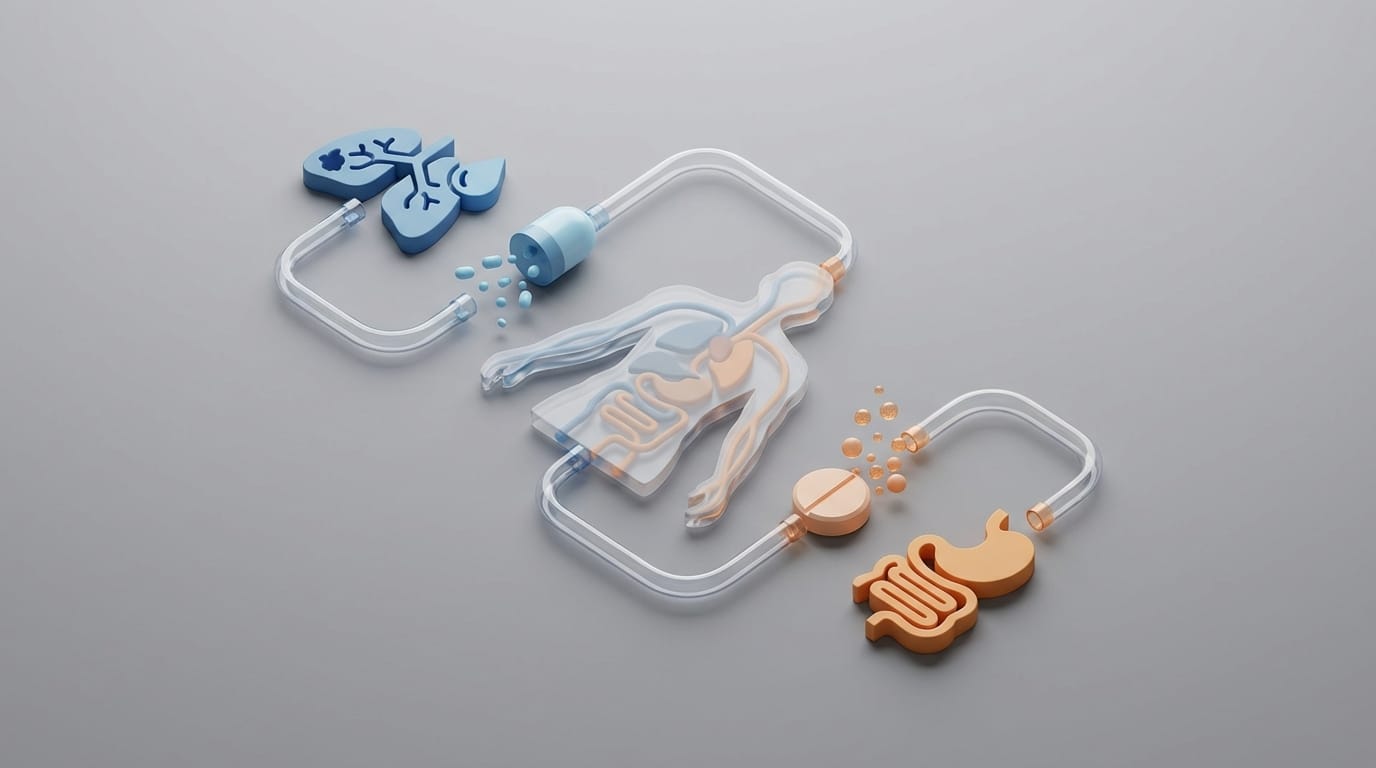
Doctors and pharmacists group medications by how they travel through the body, using either systemic or localized delivery. Systemic medications, such as oral ibuprofen or acetaminophen, enter the bloodstream and travel throughout the entire body to find their targets. A pill taken for a headache can also soothe a sore toe because the drug circulates until it binds to the correct receptors. Localized delivery applies the drug directly to the affected tissue. Eye drops, topical creams, and nasal sprays concentrate the dose where it is needed. This often allows for a lower total amount of the drug, which reduces the risk of side effects in organs like the liver or kidneys. This efficiency is why optimizing post-workout recovery often involves a mix of systemic rest and localized treatments like topical anti-inflammatories.
How Decongestants Shrink Swollen Nasal Passages
The Chemical Role of Vasoconstrictors
Mucus does not cause nasal congestion; instead, swelling blood vessels in your nasal membranes block the airway. When you have a cold, your body sends extra blood to the area to transport immune cells, which causes the tissues to expand. Decongestants function as alpha-adrenergic agonists. They tell the smooth muscles around those blood vessels to tighten. As these vessels shrink, the physical volume of the nasal tissue decreases and reopens the passage for air. It is a mechanical solution to a biological problem. Because these receptors exist in other parts of the body, systemic decongestants can also raise blood pressure or cause a racing heart. The drug’s signal to tighten is not always confined to the nose.
Oral Phenylephrine vs Pseudoephedrine
There is a significant performance gap between the two most common oral decongestants. Pseudoephedrine works well because it has high bioavailability, meaning most of the drug you swallow reaches your bloodstream. In contrast, oral phenylephrine is increasingly viewed as ineffective. A recent FDA review of nasal decongestants concluded that oral phenylephrine does not work at standard doses. Metabolism prevents oral phenylephrine from working. When you swallow a phenylephrine pill, it must pass through the gut and the liver before reaching the rest of the body. This process breaks down more than 99% of the drug into inactive parts. Consequently, less than 1% of the active ingredient survives to reach the nasal tissues, according to clinical pharmacology data reviewed by the FDA. This makes many multi-symptom cold medicines ineffective for congestion relief.
OTC Medication Ingredients Explained: Why Sprays Outperform Oral Versions
The Impact of First Pass Metabolism
When you have otc medication ingredients explained through the lens of delivery, the advantage of nasal sprays becomes clear. Unlike oral pills that must survive the stomach and liver, topical sprays like oxymetazoline bypass the digestive system. By applying the medication directly to the swollen nasal lining, the drug can start working within seconds. This direct route avoids the metabolic breakdown that occurs with pills. Because the drug does not need to circulate through the entire body to reach the nose, the dosage can be smaller and more concentrated. This precision is why sprays provide immediate relief that oral pills struggle to match.
Localized Concentration vs Systemic Distribution
Topical sprays come with a risk known as rebound congestion. If you use a direct-acting spray for more than three consecutive days, the blood vessels in your nose begin to rely on the drug to maintain a normal size. Once you stop the spray, the vessels swell even more than before. Oral decongestants are less likely to cause this specific localized dependency because they are distributed throughout the body, but they carry a higher risk of insomnia. Understanding this trade-off is essential for managing recovery, much like how designing a bedtime routine requires balancing environmental triggers with your body chemistry to ensure restorative rest.
Managing Mucus with Expectorants and Suppressants
Thinning Secretions with Guaifenesin
Expectorants like guaifenesin do not stop a cough. Instead, they change the quality of the mucus. Guaifenesin triggers a signal to the vagus nerve, which tells the glands in the respiratory tract to secrete more water. This increased hydration thins the mucus and makes it easier for the tiny hairs in your lungs to move it upward. Guaifenesin requires water to function. Without enough hydration, the drug has no raw materials to work with, and its ability to thin secretions vanishes. Think of it as a lubricant that only works if the system is well-oiled.
Interrupting the Cough Reflex with Dextromethorphan
While expectorants help you clear out waste, suppressants like dextromethorphan (DM) aim to quiet the brain’s urge to cough. Dextromethorphan acts on the cough center in the brain. It raises the threshold for the cough reflex, so it takes a much stronger stimulus from your throat or lungs to trigger an actual cough. According to research from the National Library of Medicine, dextromethorphan is effective for dry coughs that prevent sleep. However, taking a suppressant for a cough that produces mucus can be counterproductive because it traps infected material in your lungs.
How Antacids and Acid Reducers Balance Digestive pH
Chemical Neutralization via Calcium Carbonate
When you experience heartburn, stomach acid has escaped into the esophagus. Antacids like calcium carbonate are basic compounds. When they meet the acid in your stomach, a classic chemical neutralization reaction occurs. The acid and base react to form water and a neutral salt. This process is nearly instantaneous and provides relief within minutes. Because it is a simple chemical reaction, the effect only lasts as long as the antacid is present in the stomach. Once the mixture passes into the intestines, the stomach continues to produce new acid and the symptoms may return.
Blocking Histamine with H2 Receptor Antagonists
If antacids are the sponge that soaks up acid, H2 blockers like famotidine are the valve that slows the flow. These drugs bind to receptors on the cells in your stomach lining. Normally, when certain chemicals bind to these receptors, they signal the cell to pump out acid. By blocking the receptor, the drug prevents the signal from being delivered. H2 blockers take longer to work than antacids, usually about an hour, but their effects last for several hours. This makes them a better choice for preventing heartburn before a meal or managing symptoms through the night.
The Mechanics of Moving the Digestive System
Stimulant Laxatives vs Osmotic Agents
Laxatives address constipation through two different paths. Stimulant laxatives, such as senna, irritate the lining of the intestines. This irritation triggers the muscles to begin rhythmic contractions that move waste through the colon. The body can become dependent on stimulants if they are used too often. Osmotic laxatives, like polyethylene glycol, use physics instead. These compounds stay in the colon and pull water into the space. The extra water softens the waste and increases its volume, which naturally stretches the intestinal walls and triggers a contraction.
How Bulk Forming Fibers Regulate Transit
Bulk-forming laxatives, such as psyllium husk, are concentrated fiber. They absorb water to create a soft, bulky mass. This provides a physical surface for the intestinal muscles to push against and regulates the speed of transit. Fiber acts as a stabilizer that prevents the system from moving too fast or too slow. Choosing between these options requires understanding the root cause of the problem. A person whose system is sluggish due to a lack of movement might need a different approach than someone who is dehydrated.
The Hidden Downsides of Multi Symptom Medications
The Problem of Redundant Ingredients
The “all-in-one” cold pill is a product of marketing rather than medical necessity. Many of these products combine acetaminophen with a decongestant, a cough suppressant, and an antihistamine. If you take a multi-symptom pill and then also take a separate dose of acetaminophen for a fever, you risk an accidental overdose. Acetaminophen toxicity is a leading cause of liver failure because the drug is hidden in so many different OTC formulas. Learning to have otc medication ingredients explained by their chemical function helps you avoid these pitfalls.
Subtherapeutic Dosing in All in One Formulas
By buying single-ingredient medications, you maintain control over your dosage. You can stop the decongestant once your nose clears while continuing the cough suppressant. Manufacturers sometimes include small doses of certain ingredients to keep multi-symptom pills shelf-stable. You might get enough of a suppressant to take the edge off a cough, but not enough to actually stop the reflex in the brain. You end up with the side effects of four different drugs without the full benefit of any of them.
Targeted treatment is superior for those who want to understand how their body responds to medication. It turns your medicine cabinet into a functional toolkit for maintenance. Treating symptoms is about managing the body’s temporary limits. When we understand how these ingredients work, we move from being passive consumers to active managers of our health. Medicine is a tool to support the body’s existing recovery mechanisms. The next time you are in the pharmacy, look at the chemistry on the back of the box rather than the symptoms on the front. Your body and your wallet will thank you.