
Focusing on the Infrastructure of Modern Kitchens
Focusing solely on cabinet colors and backsplash tiles during a renovation often leads to a kitchen that looks modern but fails to support the heavy electrical and functional demands of modern technology. True value comes from smart kitchen upgrades that integrate into the home’s infrastructure; this ensures the space remains efficient, healthy, and adaptable as your needs evolve. A successful renovation should solve the friction of daily life instead of just changing how a room looks. While many people focus on visual appeal for resale value, the highest returns come from system improvements that owners notice once they start using the space. By prioritizing the hidden backbone of the kitchen, you protect your investment from becoming outdated too quickly.
Current buyers are increasingly looking for homes that are ready for high-performance appliances, medical-grade air and water filtration, and flexible zones for multiple cooks. Shifting your focus from surface-level gadgets to integrated systems is the key to achieving a high return on investment while enjoying a better living experience. Most homeowners overspend on high-end tile while underinvesting in the kitchen backbone, which is a common mistake in residential design. While a beautiful quartz countertop is a selling point, its utility is static. In contrast, the systems beneath the surface, such as electrical capacity, network stability, and ventilation, dictate how well the kitchen functions over a ten-year horizon.
The shift from cosmetic trends to functionality is becoming the standard. Designers now prioritize upgrades that solve friction, such as automated inventory tracking or adaptive lighting, rather than simply adding more screens to appliances. Analysis shows that well-executed kitchen projects can return up to 100% of their cost, provided the focus remains on performance and efficiency rather than just the latest color palette. There is also a difference between standalone gadgets and integrated technology. A gadget is a single device that often clutters the counter and eventually becomes electronic waste. Integrated tech is part of the home’s network, including things like hardwired sensors that detect leaks before they cause damage. For those looking to build a resilient setup, learning how to solve smart home connection problems is a vital skill for maintaining these integrated systems.
Investing in High Capacity Electrical Infrastructure
A connected kitchen is an electrified kitchen. As we move away from gas toward high-performance induction and steam cooking, the electrical demands of the average home are shifting. If you are opening your walls during a remodel, the most valuable thing you can do is pull high-capacity wiring that exceeds current standards. Preparing the grid for a high-wattage kitchen today prevents expensive teardowns later. A standard gas range might only require a basic outlet for its igniter, but a modern induction cooktop typically needs a dedicated 240-volt circuit with a 50-amp breaker.
To support this, electricians must run heavy 6-gauge wire from the main panel. If you plan on adding a steam oven or a speed oven alongside your main range, you may need additional dedicated circuits. Future-proofing involves installing extra conduit or pull-strings behind your walls now, allowing you to upgrade components without damaging your cabinetry. Beyond the appliances, consider hidden power hubs and discrete charging stations. Rather than having a tangle of cords on your island, use pop-up power towers or recessed drawers with built-in USB-C ports. This keeps the aesthetic clean while ensuring your devices are always ready. These hubs also benefit from the principles of modern wireless power, allowing you to charge everything from smartphones to kitchen scales without a single visible cable.
Transitioning from Traditional Triangles to Smart Kitchen Upgrades
For decades, the work triangle, which is the path between the sink, stove, and refrigerator, was the gold standard of kitchen design. However, as kitchens have become the central hub of the home, this triangle often breaks down. Modern kitchens frequently host several people at once, including those cooking, prepping, and working or doing homework. The solution is the creation of specialized work zones. By breaking the kitchen into prep, cooking, cleanup, and social zones, you reduce physical congestion and improve the flow of the room.
A prep zone might include a secondary sink with an integrated compost unit, while the cleanup zone focuses on a high-capacity dishwasher and deep basin sink. Smart kitchen upgrades like task-specific lighting can further enhance these zones. Sensors can detect when you are at the prep station and adjust the light to a cool, focused temperature, then transition to a warmer glow when the station is used for serving. Ergonomics play a massive role here as well. Lasting value is found in upgrades like motorized cabinetry that brings high shelves down to eye level or touchless sensors on every faucet. These features are essential for universal design, ensuring the kitchen remains usable as homeowners age. Maintaining the physical integrity of these zones is equally important, so knowing how to seal sinks correctly ensures that water damage does not compromise your custom cabinetry over time.
Health Centric Upgrades for Water and Air Quality
One of the most significant trends is the focus on the kitchen as a health and wellness center. As open floor plans remain popular, the kitchen’s air and water quality impacts the entire living space. High-performance ventilation is no longer optional; it is a requirement for maintaining indoor air quality, especially in homes where the kitchen and living room share the same atmosphere. Traditional range hoods often move air but fail to filter it effectively. For a standard 36-inch cooktop, professional guidelines recommend at least 300 to 600 cubic feet per minute of airflow to properly extract particles.
Modern intelligent hoods use sensors to detect heat and vapor levels, automatically adjusting the fan speed to maintain air quality without excessive noise. This is vital for induction cooking, which still produces smoke and grease from the food itself. Water quality is the second pillar of health-centric design. Integrated multi-stage filtration systems, such as Reverse Osmosis or advanced UV systems, are becoming standard in high-end renovations. These systems can be hidden beneath the sink or integrated directly into faucets that track water consumption and filter life. These touchless sensors also reduce cross-contamination and waste, which is a major factor for eco-conscious buyers. Industry reports show that the smart kitchen market is growing rapidly, with a heavy emphasis on these practical, health-focused features.
Smart Appliances with Long Term Practical Utility
When selecting appliances, the goal should be to choose units that age like software instead of hardware. Modern appliances receive over-the-air updates to improve their efficiency and add features over time. This shifts the value from the physical machine to the service it provides. For instance, an oven that receives a new air-fry or sous-vide setting through an update is far more valuable than one with a static feature set. Induction and steam cooking are the current leaders for long-term utility. Induction provides speed and precision, while steam ovens preserve the nutrients and texture of food better than traditional convection.
These technologies are also more energy-efficient, which lowers the long-term cost of ownership. Energy efficiency ratings are another critical metric for resale value. Buyers are increasingly wary of high utility bills, making energy-rated appliances a top priority. When integrating these devices, security should not be an afterthought. Connected appliances can be entry points for network vulnerabilities, so maintaining digital privacy is essential for any homeowner connecting their kitchen to the internet. Ensuring your devices are on a secure, segmented network protects your data while providing all the conveniences of a connected home. Modern refrigeration is also evolving to focus on utility; rather than a giant screen for watching television, current fridges use internal cameras and AI to manage inventory and reduce food waste by alerting you when items are about to expire.
How Designers Balance Tech Innovation with Timeless Appeal
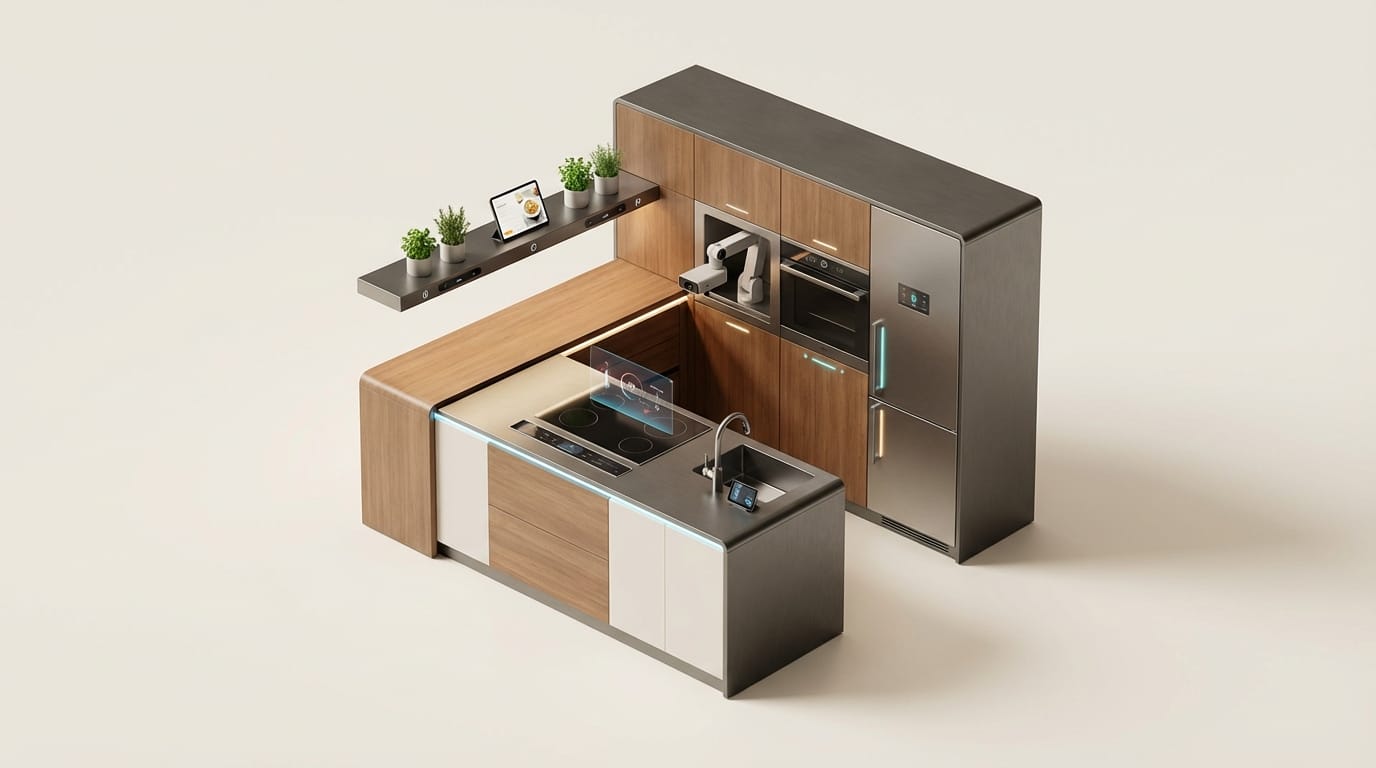
A common fear among homeowners is that smart kitchen upgrades will make their home look dated in a few years. To avoid this, designers use stealth technology that hides equipment within custom cabinetry. This means using integrated panels for dishwashers and refrigerators so the machines do not disrupt the visual flow of the room. Digital interfaces should be discrete, perhaps using a touch panel that disappears into a stone countertop or voice controls that eliminate the need for physical buttons. By using standardized appliance dimensions, you also ensure that if a specific piece of technology does become obsolete, it can be swapped out easily without replacing the entire cabinetry system.
Finally, selecting finishes that complement digital interfaces is a subtle but powerful design choice. Matte finishes hide the fingerprints that naturally accumulate on touch-sensitive surfaces. Natural materials like wood and stone provide a warm contrast to the feel of glass and steel technology, creating a balanced environment that feels both high-tech and comfortable. This balance is what creates a timeless appeal that attracts buyers and ensures your kitchen remains the heart of the home for decades. The real value of a kitchen renovation lies in its ability to adapt to the physical and digital realities of modern life. By investing in high-capacity electrical lines, ergonomic work zones, and health-centric filtration, you are building a system that serves your daily health as much as your culinary ambitions. This approach builds a resilient asset that maintains its utility and appeal long after the latest tile trends have faded.