
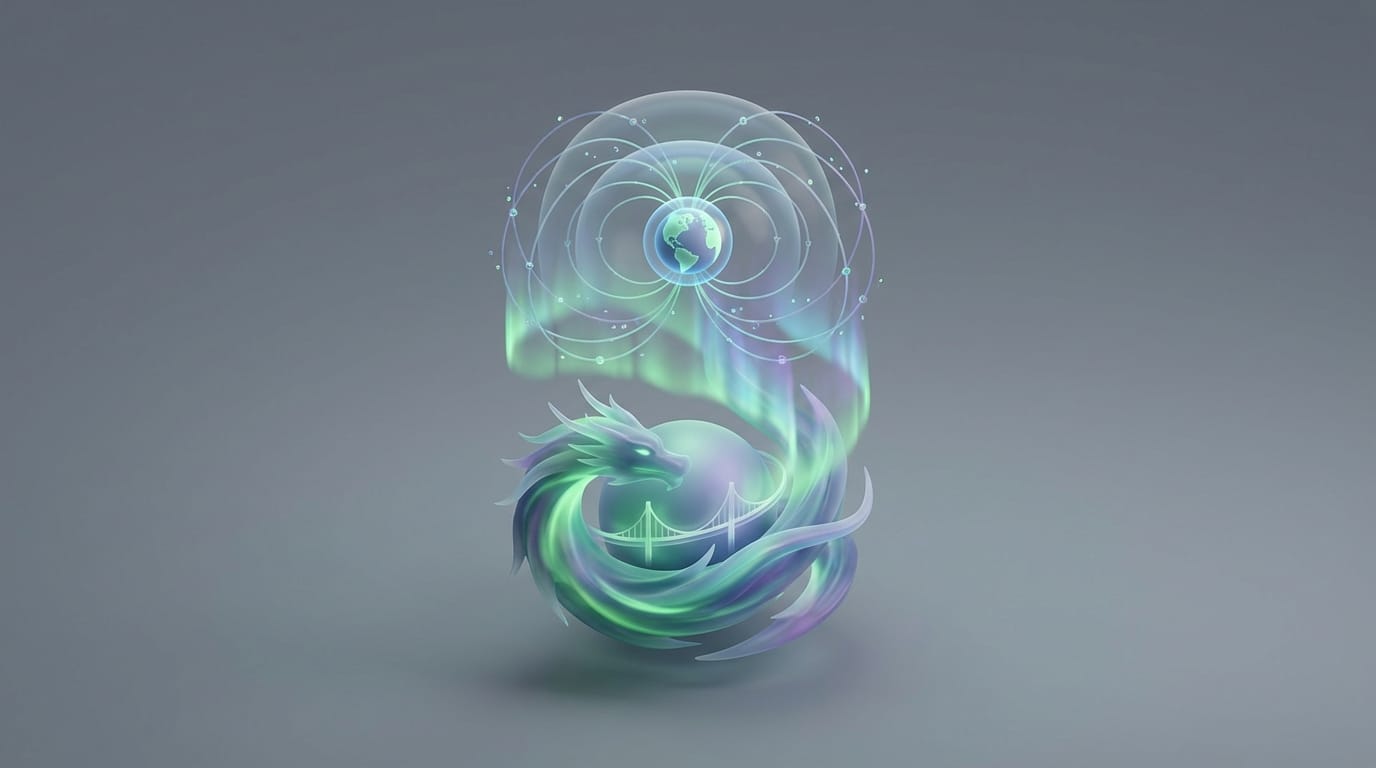
The Ancient Connection Between Solar Flares and Human Storytelling
When the sky ignites without heat or sound, the human mind instinctively bridges the gap between physics and folklore to find meaning. This celestial display is not a random glitch in the atmosphere but a visible signature of a deep space connection. By exploring aurora borealis science and mythology, we find a bridge between the specific movements of ionized gases and the “dancing spirits” that inspired northern cultures for centuries. While the rare, blood-red glows of solar storms fueled apocalyptic omens in the south, these lights remain a constant reminder of our planet’s place in a busy solar system.
For millennia, the relationship between solar activity and human narrative has been one of observation and translation. What a modern engineer describes as a geomagnetic storm, a Norse traveler might have seen as the Bifröst bridge, or a shimmering path leading to the gods. These stories were not merely fantasies; they were advanced efforts to sort a system that operates on a scale far beyond the local environment. These myths linked the interior of the Sun to the chemistry of our own upper atmosphere, creating a record of events that modern tools can now confirm with data.
Today, we can map the exact physical mechanics that dictate why the aurora behaves the way it does. We know that the flicker of a “curtain” and the shift from green to violet are products of specific atomic collisions. By examining these technical details, we gain a deeper appreciation for the ancient cultures that correctly identified the “intent” and “energy” behind these lights. Even without the vocabulary of modern physics, they captured the essence of a living, breathing sky. This intersection of aurora borealis science and mythology shows that the human desire to explain the unknown often leads to the same truths that science later proves through math and measurement.
The Solar Engine Behind the Celestial Light Show
How the Sun Propels Charged Particles Toward Earth
The system begins nearly 93 million miles away at the solar corona. The Sun acts as a massive nuclear furnace, heating its outer atmosphere into a turbulent sea of plasma. This environment constantly sheds a stream of electrons and protons known as the solar wind. Occasionally, the Sun releases much larger bursts of energy called coronal mass ejections. These events hurl billions of tons of magnetized plasma into space at speeds exceeding a million miles per hour. These massive eruptions are the primary drivers of the most intense light shows recorded throughout history, according to NASA’s heliophysics research.
As these particles travel through the void, they carry the Sun’s magnetic field with them. If the magnetic orientation of the solar cloud aligns correctly with Earth’s own field, the two systems connect. This connection allows solar energy to pour into our protective bubble. The process is not unlike a cosmic battery charging up, where the energy must eventually find a way to release itself. When the pressure becomes too great, the magnetic lines snap and rejoin, flinging particles back toward Earth at incredible speeds. This interaction is remarkably similar to the engineering behind the principles of nuclear fusion technology, where magnetic confinement manages high-energy plasma states.
Why the Magnetosphere Funnels Energy to the Poles
Earth stays safe thanks to a geomagnetic field, a vast magnetic shield generated by the motion of molten iron in its core. When the solar wind reaches our planet, it does not crash directly into the surface. Instead, the magnetosphere deflects the majority of these charged particles, pushing them around the planet like water flowing around a stone in a stream. However, the magnetic field lines are weakest at the north and south poles. Like a funnel, these lines guide the solar particles toward the polar regions, where they can finally penetrate the upper atmosphere. This geographical reality shaped the specific spiritual traditions of Arctic peoples who lived directly under these magnetic entry points.
As these particles descend, they collide with atmospheric gases—mostly oxygen and nitrogen—at altitudes between 80 and 500 kilometers. These collisions transfer energy to the gas atoms through a process called atmospheric excitation. When the atoms return to their normal state, they release that energy as light. The result is a luminous glow that mirrors the complexity of the magnetic field lines it follows. The human eye sees this as a curtain because the particles follow the vertical lines of the magnetic field, creating long streaks of light that seem to hang from the stars.
Why Moving Lights Inspired the Legend of Dancing Spirits
The Science of Fluid Motion in Ionized Gases
One of the most striking features of the aurora is its movement. It rarely stays still; it ripples, pulses, and folds like fabric in a breeze. This effect comes from the alignment of particles along the Earth’s vertical magnetic field lines. As the intensity of the solar wind fluctuates, the sheets of light appear to move in a fluid motion. From a physics perspective, we are witnessing the visualization of magnetic turbulence. The lights appear to “dance” because the entry points for the solar particles are constantly shifting across the ionosphere, responding to the invisible tug of the Sun’s magnetic grip.
For the Inuit and other Arctic cultures, this fluid motion suggested life and agency. The specific motif of the “spirit ball game” is a direct translation of the aurora’s erratic, leaping movements. In many traditions, the lights were ancestors playing a game with a walrus skull as the ball. Research in the Journal of Modern Physics suggests that the altitude and temperature of the thermosphere allow these lights to form in ways that mimic organic movement, reinforcing the idea of a living sky. These cultures did not see the lights as objects, but as a community of spirits interacting with the world of the living.
The Haunting Silence of the Higher Atmosphere
The perceived silence of the aurora also added to its spiritual weight. While modern sensors have detected very low-frequency radio waves and rare acoustic claps during intense storms, the display is almost always silent to the human ear. This creates a haunting, reverent atmosphere that demands attention. Many northern cultures believed that the lights were the “Merry Dancers” or the souls of the dead. Because the lights moved with such grace yet made no sound, they were viewed as inhabitants of a higher, sacred realm rather than physical objects within the lower atmosphere. This silence made the visual display feel more like a dream or a vision than a weather event.
Some observers still claim to hear rustling or popping sounds when the lights are particularly bright. Scientists once dismissed these reports as psychological, but recent studies suggest they might be right. Under certain conditions, a temperature inversion layer can trap electrical charges near the ground. During a solar storm, the discharge of this built-up electricity can create audible sounds. This shows how oral traditions often preserve real physical phenomena that take science centuries to verify. The bridge between aurora borealis science and mythology is built on these shared observations of a world that is much more active than it seems.
The Meaning of Colors in Global Folklore
Oxygen Altitudes and the Shift in Color Spectrum
The dominant color of the northern lights is green, produced by oxygen atoms at altitudes of roughly 100 to 150 kilometers. However, during periods of extreme solar activity, the solar wind penetrates deeper or excites oxygen at much higher altitudes above 200 kilometers. At these higher elevations, the lower density of atoms allows oxygen to emit a deep red light. Because red auroras occur at the top of the curtain, they can be seen from much further south than the green lights, appearing as a crimson glow on the horizon for people in mid-latitudes who rarely see the sky change color.
In central and southern Europe, an aurora is a rare, once-in-a-generation event. When it does occur, people often see the red variety. Throughout history, these sightings of a blood-red sky were interpreted as omens of disaster. While the northern green lights were often seen as benevolent ancestors, the red auroras of the south were viewed as battling armies or blood in the clouds. Historical archives from news reports on solar cycles show that intense red auroras often appeared before major social shifts, terrifying onlookers who saw them as a literal sign of coming bloodshed.
How Frequency Shapes Cultural Meaning
This geographic divide highlights a fascinating pattern: frequency breeds familiarity. In the North, where the lights are common and green, they are integrated into daily life as spirits or guides. In the South, where they are rare and red, they are treated as catastrophic interruptions to the natural order. This is a classic example of how a rare system failure—in this case, a massive geomagnetic storm—creates a unique psychological impact. The red aurora was not just a light; it was a warning from the heavens that the balance of the world had been disturbed.
Modern science validates the rarity of these red displays. They require a specific level of solar energy to reach the heights where oxygen glows red. By tracking these historical “omens,” scientists can actually map out the history of the Sun’s activity over thousands of years. We can look at a 12th-century scroll describing a “burning sky” over Japan and know exactly what kind of solar flare hit the Earth that week. Mythology, in this sense, serves as a long-term data set for solar physicists.
How Scientific Observation Validates Ancient Oral Histories
The Relationship Between Solar Cycles and Records
Modern physics confirms that the Sun operates on an 11-year cycle of activity. By checking tree ring data and ice core samples, which record spikes in carbon-14 from solar storms, researchers find remarkable alignments with ancient chronicles. Medieval European records of “heavenly fires” and Chinese accounts of “shimmering dragons” often correspond exactly to known peaks in the solar cycle. These myths were effectively a form of non-technical data collection, recording the frequency and intensity of solar events long before the invention of the telescope.
Today, we use high-sensitivity sensors and AI-driven imaging to study the ionosphere. These tools reveal structures within the aurora that were previously invisible to the naked eye. Interestingly, the way these systems process visual data mirrors the way ancient people used symbols. For instance, how AI graphics upscaling replaces traditional native resolution involves filling in gaps based on patterns. This is much like how the human brain filled in the moving curtains of light to see the armor of the Valkyries or the torches of spirits. We are still using patterns to make sense of the noise, whether those patterns are made of math or myth.
A Modern Legacy of the Northern Lights
By viewing mythology as an early system of environmental monitoring, we stop seeing it as “wrong” science. Instead, it becomes a historical record of Earth’s interaction with the Sun. The Inuit descriptions of whistling sounds, once dismissed as fanciful, are now being investigated by scientists who believe that the electrical discharge from an aurora could indeed create audible popping sounds near the ground. Every time we find a physical cause for an ancient story, the gap between aurora borealis science and mythology narrows.
The study of these lights serves as a reminder that we live within an integrated solar system. The same particles that create a beautiful light show also have the potential to disrupt modern infrastructure, from satellite communications to power grids. Just as ancient people sought to understand the “mood” of the lights to predict their fate, we now monitor solar wind to protect our technological environment. Whether interpreted as dancing spirits or ionized oxygen, the aurora remains a profound bridge between the physics of the stars and the human experience on Earth. As our technology grows more complex, we continue to translate these natural patterns into new stories, waiting for the scientists of the future to decode them once again.