
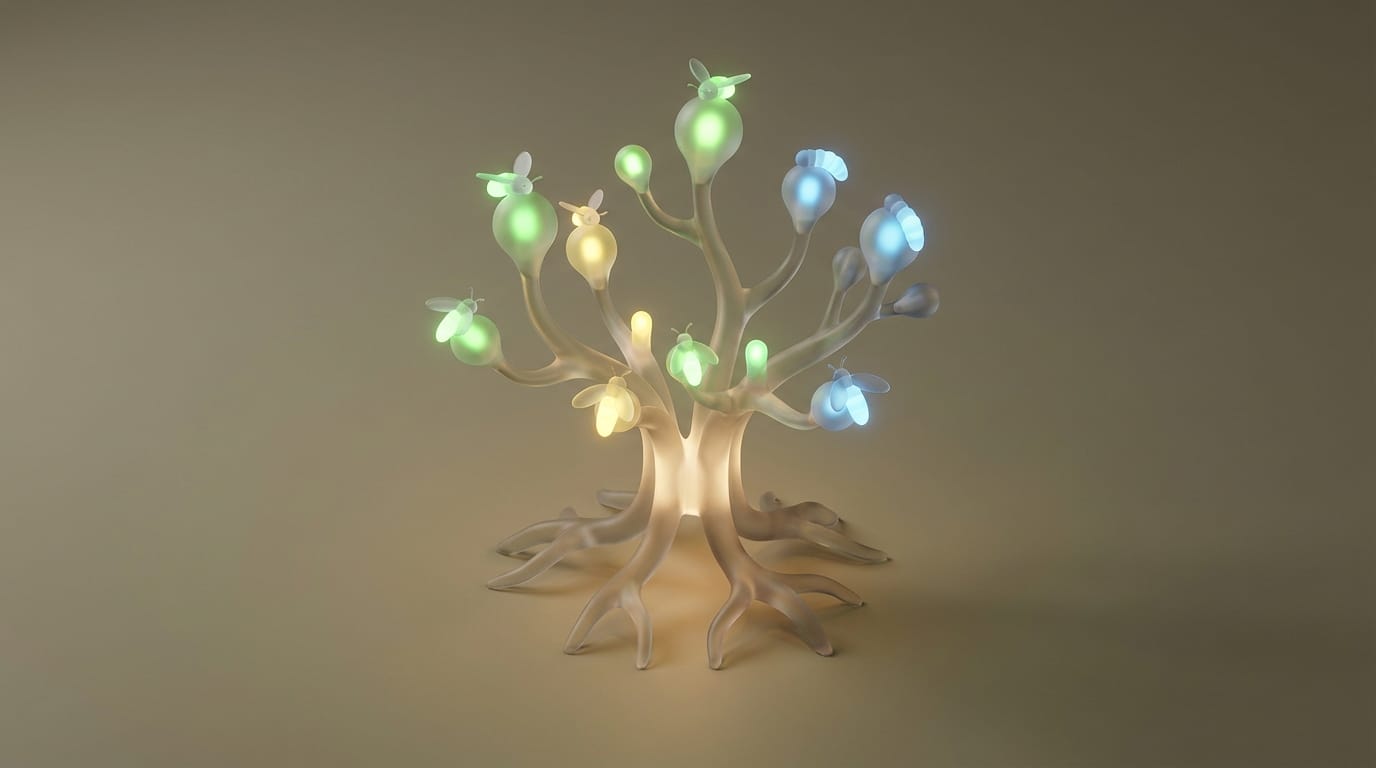
Treating bioluminescence as a mere aesthetic curiosity ignores the high-stakes chemical mastery required to produce light without incinerating living tissue. In the insect world, light is not a decoration but a precision tool developed through millions of years of selective pressure. While we often associate glowing with the magic of a summer night, the reality is a story of extreme efficiency where organisms have solved thermal problems that human engineers are only beginning to master. Understanding bioluminescence in insects requires looking past the glow and into the metabolic trade-offs and structural innovations that make it possible.
This biological light serves as a testament to the versatility of evolution; it functions as a language, a weapon, and a shield all at once. To a senior engineer, a firefly looks less like a bug and more like a highly optimized solid-state device that manages oxygen flow and photon extraction with a level of control that rivals modern fiber optics. As we explore this system, we find that the modern nature of land-based light reveals a fascinating gap between the ancient history of the oceans and the relatively recent arrival of luminous life on our own soil.
How Insects Generate Light Without Producing Heat
The Interaction Between Luciferin and Luciferase
The core of the biological lantern is a chemical reaction involving two primary actors; these are a light-emitting molecule called luciferin and an enzyme called luciferase. When these two meet in the presence of oxygen, magnesium, and adenosine triphosphate (ATP), the luciferase acts as a catalyst to oxidize the luciferin. This process excites the electrons within the luciferin molecule. As these electrons return to their ground state, they release energy in the form of photons. This reaction is so specialized that different species can tune the color of their light by slightly altering the molecular structure of their luciferase, allowing for a spectrum that ranges from ghostly greens to deep oranges.
Why Cold Light is a Biological Necessity
In human-made systems, light is often a byproduct of heat. An incandescent bulb loses about 90% of its energy as thermal waste, which makes it an incredibly inefficient radiator. For a living organism, this level of thermal output would be fatal because it would literally cook the insect from the inside out. Insects produce what is known as cold light, where virtually no energy is lost to heat. This high-efficiency chemiluminescence allows a firefly to maintain its flashing patterns for hours without raising its internal body temperature. This feat makes them nearly 100% efficient, according to biochemical analysis from Curious Minds regarding nature’s glow-in-the-dark wonders.
The Biological Infrastructure of the Lantern Organ
How the Abdomen Regulates Oxygen Intake
The light reaction does not happen continuously; instead, the insect pulses it with rhythmic precision. To control this, the insect uses its tracheal system, which is a network of tubes that delivers air throughout its body. Within the light organ, specialized cells called photocytes are packed with mitochondria and the luciferin-luciferase cocktail. When the insect wants to flash, it sends a signal to increase the oxygen flow to these cells. By regulating the oxygen valve, the insect acts as a biological switch that triggers the oxidation reaction in precise, rapid bursts. This regulation is crucial for the complex signaling required in courtship and defense.
This system of rapid signaling shares similarities with how advanced defense systems coordinate signals by prioritizing and timing responses. The insect’s nervous system must manage the timing of these oxygen bursts to ensure the message sent matches the intended pattern of its species. If the timing is off, the signal fails and the metabolic energy spent on the flash is wasted, which could mean the difference between finding a mate and remaining solitary.
Reflector Layers and Bioluminescence in Insects
Generating light is only half the battle; the other half is getting that light out of the body efficiently. The lantern is lined with a layer of urate crystals that act as a biological mirror. This mirror reflects light outward so it doesn’t get absorbed by the insect’s internal tissues. Furthermore, the external surface of the lantern is not smooth. It is covered in microscopic, asymmetrical structures that reduce internal reflection. These nanostructures ensure that photons escape into the air rather than bouncing back inside. This natural engineering is so effective that researchers have modeled LED lenses after firefly cuticles to improve light extraction by up to 90% in modern electronic devices.
Why Terrestrial Bioluminescence Evolved Late
The 335 Million Year Gap Between Sea and Land Light
One of the most striking insights in evolutionary biology is the timeline of light. Marine bioluminescence is ancient, with researchers dating its origin back over 540 million years. In contrast, bioluminescence in insects is a newcomer that appeared only within the last 65 to 140 million years. This means there was a massive gap of hundreds of millions of years where the oceans were glowing while the land remained dark. This delay suggests that while the deep sea required light for basic survival in a sunless environment, terrestrial habitats didn’t provide the right selective pressures for light production until much later in history.
Adapting to Post-Cretaceous Environments
The rise of glowing insects coincides roughly with the diversification of flowering plants and the emergence of new nocturnal predators. It is likely that as land environments became more complex, the need for specialized night-time communication increased. Some theories suggest that land-based light began as a warning signal in larvae before being used for adult mating rituals. This transition mirrors the way communication systems adapt to new challenges; once a signal is established and understood by the environment, it can be changed for entirely new functions like identification or deception.
How Light Signals Coordinate Insect Social Life
Synchronized Pulses for Mate Identification
For many species, bioluminescence in insects functions as a high-fidelity cryptographic key. Each species has a unique flash pattern that consists of a specific pulse duration, frequency, and delay. Males fly and flash while females remain on the ground and respond only to the specific rhythm of their own kind. This prevents different species from breeding and ensures that energy is only spent on viable mates. In some regions, entire populations of fireflies will synchronize their flashes to create a massive, rhythmic pulse of light. This collective behavior helps individuals find the pulse of their colony from great distances through the visual noise of the forest.
Mimicry and Deception in Predatory Species
However, the system is not without its risks. The “femme fatale” fireflies of the genus Photuris have learned to mimic the response flashes of other firefly species. A male of a different genus may see what looks like a receptive female of his own kind, only to find himself being eaten when he lands. This predatory mimicry shows that even the most complex biological systems are subject to exploitation. Much like how digital systems handle deceptive requests to protect user data, these predators exploit the visual logic of the mating signal to gain a metabolic advantage over their prey.
The Role of Glow in Predator Deterrence
Aposematism and Warning Colors in the Dark
Beyond mating, light serves as a clear warning sign. Many bioluminescent insects, such as railroad worms and certain click beetles, are chemically defended with bitter or toxic compounds. In the daylight, toxic insects use bright colors like red or yellow to warn predators. At night, they use light to achieve the same goal. This is known as bioluminescent aposematism. A predator that has had a bad experience with a glowing larva will quickly learn to associate that specific light with a foul taste. This protects the insect from future attacks without the need for a physical struggle.
The Metabolic Cost of Maintaining Light Production
Running a biological lantern is not free; it requires a significant investment of ATP and the constant synthesis of luciferin and luciferase. Insects must balance this energy expenditure against other needs like flight and egg production. This metabolic tax means that bioluminescence in insects only evolves when the benefits of finding a mate or avoiding a predator outweigh the cost of the fuel. It is a perfect example of biological trade-offs where every photon emitted is a piece of energy that cannot be used for anything else. This balance determines how often an insect flashes and how bright that flash can be during its short adult life.
The engineering of insect light is a masterclass in optimization. By looking at the way these tiny creatures manage oxygen, maximize photon extraction, and use light as a sophisticated language, we see a system that is as much about physics and chemistry as it is about biology. The fact that terrestrial light appeared so much later than marine light reminds us that evolution is reactive. It builds complex tools only when the environment demands them. As we continue to study these biological lanterns, we find not just a curiosity of nature, but a blueprint for more efficient human technology from brighter LEDs to better chemical sensors.
If insect bioluminescence represents a modern solution to terrestrial communication, we must wonder what other dormant biological systems might be waiting for the right environmental shift to activate. The 335-million-year gap between the sea and the land suggests that the systems we see today are only a small part of what life can produce under pressure. For the curious observer, the firefly in the backyard is more than a bug; it is a high-speed, light-producing computer that has been perfecting its code for over 65 million years.