
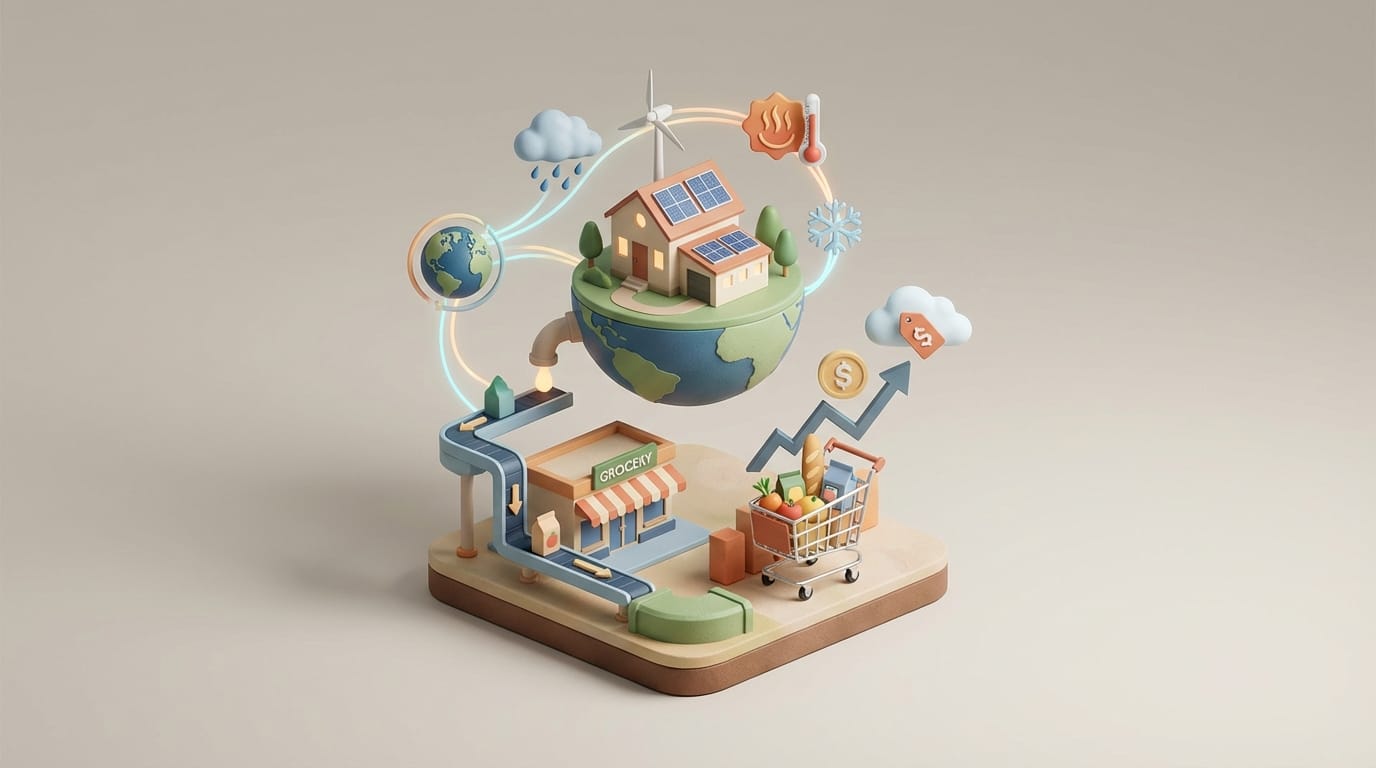
Many people view environmental shifts as distant problems, but the clearest evidence of a warming planet now appears at the bottom of your weekly grocery receipt. The connection between climate change food prices and your household budget is no longer a matter of theory. As of early 2026, the systems that once kept our food supply stable are facing a level of change that traditional markets can no longer easily manage. You can see this reality in every aisle, from the produce section to the frozen goods. Understanding how this works requires looking past the simple idea of bad weather.
While a single storm might cause a temporary jump in the price of oranges, the current trend comes from a deep shift in how we grow, store, and move calories. Costs are not just rising because of failing harvests. They are becoming a permanent part of the grocery store itself. To manage a budget today, you must understand the hidden pressures that turn environmental changes into a new baseline for inflation. These pressures reach into every part of the supply chain, creating a ripple effect that starts on the farm and ends at the checkout counter.
Why Climate Change Food Prices Are Rising in 2026
How Temperature Shifts Drive Local Inflation
In our connected food system, a heatwave in the American Midwest or a flood in Southeast Asia is never just a local tragedy. These events act as immediate shocks to global markets. When traders expect a staple crop to be scarce, they raise prices across the entire supply chain. Research shows that a 1°C rise in monthly temperatures can drive food price inflation for at least a full year after the heatwave happens. This delayed reaction means that even when the weather seems to return to normal, you still feel the financial impact. The price of bread or cereal may stay high long after the sun has cooled, as the costs filter through the system from the grain elevator to the bakery.
The Problem of Unpredictable Weather Patterns
In the past, retailers could plan seasonal sales because the weather was predictable. If one region had a bad year, they could source food from a different part of the world. This safety net is now breaking down. As extreme weather events happen more often and in many places at once, the system loses its backup options. This is often called synchronized crop failure. When multiple major growing regions face stress at the same time, prices do not just rise for a season. Instead, they fluctuate wildly all year long. These shifts make it much harder to use traditional financial planning and budgeting skills to keep your kitchen stocked.
Why Crop Failures Are Only Part of the Story
Drought and the Cost of Staple Grains
Staple grains like wheat, corn, and soy are the foundation of the modern diet. We eat them directly, but they also serve as the main feed for livestock. When major droughts hit agricultural hubs, yields drop and the price of these grains rises. This creates a higher price floor for everything from beef to soy milk. These global supply chain shifts mean that the cost of raw materials dictates the final price of the goods in your cart. As water becomes harder to find, farmers must spend more money on irrigation. This adds another layer of cost to the crop before it even leaves the field.
Soil Health and the Price of Fertilizer
Extreme weather does more than just damage the plants. It also hurts the soil. Heavy rains wash away the rich topsoil that plants need to grow. Long periods of high heat can also kill the tiny organisms that keep the ground fertile. To fix this, farmers have to use more synthetic fertilizers. These fertilizers are expensive to make because they require a lot of energy and are tied to the price of fuel. This creates a cycle where the cost to grow food keeps climbing. The lower prices people saw ten years ago are unlikely to return because the basic cost of keeping the soil productive has permanently changed.
The Hidden Pressure of Energy Costs on Stores
How Power Demand Increases Grocery Overheads
A factor many people miss when looking at their grocery bill is the cost of running the store itself. Most grocery stores work on very thin profit margins, often around 1.7%. This means they are very sensitive to any increase in their bills. Because of thin profit margins in the grocery industry, even small changes in utility costs can lead to higher food prices. During record heatwaves, the electricity grid faces massive strain. Utility companies often add extra fees when businesses use a lot of power during peak hours. A grocery store cannot turn off its freezers to save money, so it has to pay these high fees. These costs are then passed on to you.
The Rising Price of Refrigeration
Keeping food cold is getting much more expensive. When the air outside is hotter, refrigerators have to work harder and run longer to keep food safe. In many parts of the country, stores are seeing their utility rates go up by 15% to 25%. These increases often pay for grid upgrades and fire prevention. These are not temporary spikes in cost. They are structural changes in how much it costs to do business. When a store has to pay double for electricity to keep the milk from spoiling during a summer heatwave, that expense stays in the price of the milk. This creates a permanent price floor that remains high even if the harvest was successful.
Moving Food in a Warmer World
Wildfires and Transportation Delays
Moving food from the farm to the store is just as difficult as growing it. In North America, longer wildfire seasons have turned major shipping routes into bottlenecks. Smoke and fire can close highways and rail lines for days. When this happens, refrigerated trucks must take longer routes. These detours use more fuel and take more time, adding to the total cost. Every extra hour a truck spends on the road increases the price of the produce it carries. Unlike data, which can be stored and sent later, fresh food must move quickly. When the paths it takes are blocked, the entire system becomes less efficient and more expensive.
The Impact of Higher Insurance Premiums
Insurance is a hidden cost built into every item on the shelf. As extreme weather becomes more common, insurance companies are raising their rates for shipping and storage firms. These providers have to protect themselves against the risk of a warehouse flooding or a shipment of food spoiling during a power failure. These rising premiums act like a hidden tax on the climate change food prices we see today. Since everyone in the chain has to pay for this protection, the costs add up quickly. By the time a box of cereal reaches your cart, you are paying for the insurance of the farmer, the truck driver, and the warehouse owner.
Adjusting Your Budget to New Realities
Buying Local to Save Money
For families trying to save money in 2026, the best strategy is to avoid these long-distance risks. Eating food that is grown nearby and is currently in season is no longer just a trend. It is a smart financial move. When you buy local food, you bypass the high costs of long-distance shipping and the energy fees tied to out-of-season goods. This requires a change in how we think about meals. Instead of expecting every type of fruit to be available all year, families are moving toward a more flexible approach. By following the natural growing seasons in your area, you can protect your budget from the volatility of the global market.
How New Technology Can Help
While the situation is difficult, new solutions are being used to help stabilize prices. Vertical farming is one example. These farms grow food in controlled indoor environments and use 90% less water than traditional farms. Because they are often in or near cities, they do not rely on long shipping routes. Stores are also using better cooling technology that stores cold energy during the night when power is cheaper. These upgrades are necessary to protect our food supply from a changing climate. Much like how a system needs regular maintenance to stay safe, our food infrastructure needs these changes to keep costs from spiraling out of control.
The rising cost of groceries is a signal that our food systems are under heavy pressure. By seeing that these price increases come from a mix of farm failures, energy costs, and shipping risks, we can better understand our modern economy. The link between climate change food prices and your wallet is a fundamental part of life today. Adapting to this new environment is not just about spending less money. It is about understanding how the system is changing so you can make better choices for your family. As we move forward, the goal will be to build a more resilient food chain that can handle the unpredictable nature of our world.