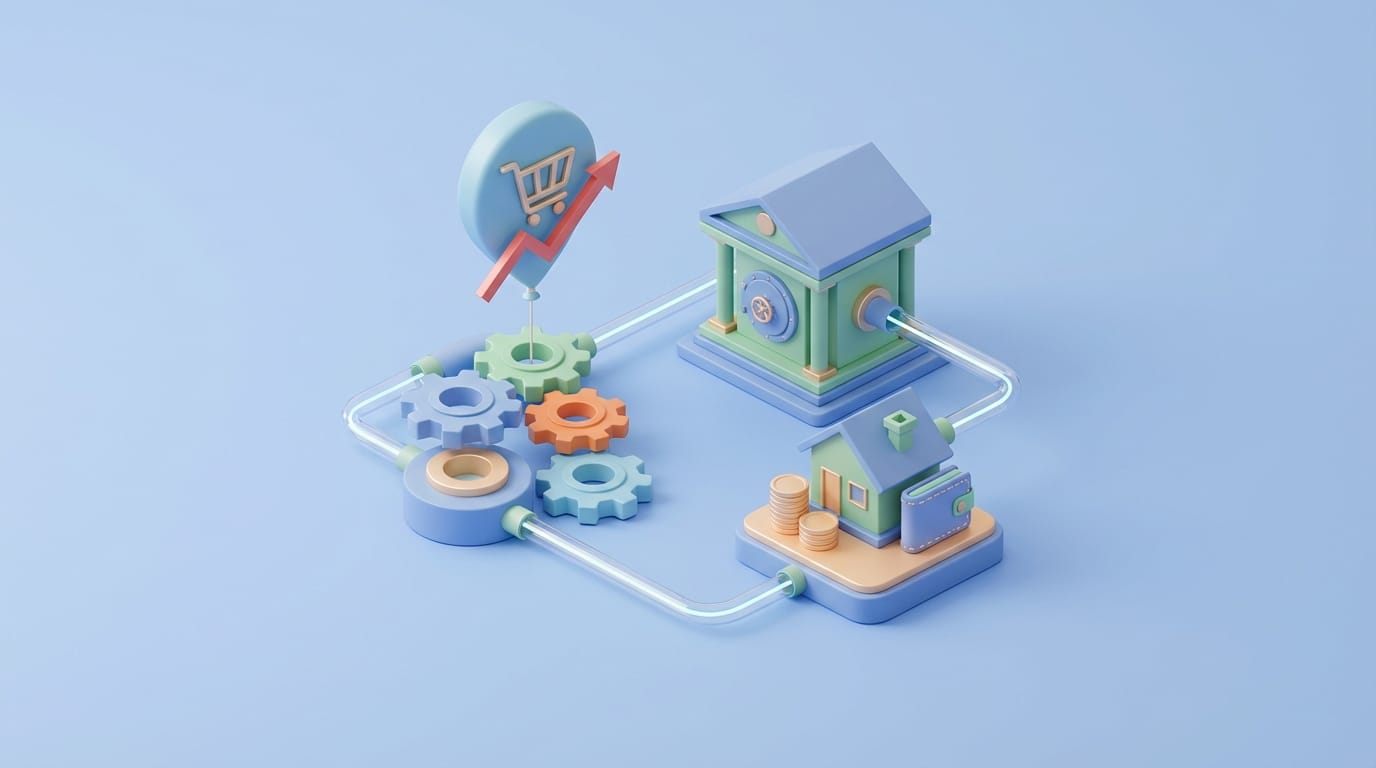
Understanding the link between inflation and interest rates prevents lost savings and helps you use debt well when the value of the dollar shifts. These two forces act as the primary guides for our money; they set the price of food and determine the health of your retirement plan. When you see how they work together, economic news stops feeling like a series of random shocks and starts looking like a clear pattern. Most people view these concepts through the lens of personal struggle, such as higher prices at the pump or more expensive monthly car payments. While those impacts are real, they are parts of a larger system designed to balance growth and stability. To manage your finances successfully in 2026, you must look past the immediate costs and understand the underlying flow of money.
By treating the economy as a set of gears that work together, you can better predict how a change in one area forces a reaction in another. This perspective allows you to move from a reactive state of planning to a proactive one where you can position your assets to benefit from the shifts that catch others off guard. You no longer have to guess why your bank changed its rates or why your home value shifted; instead, you can see the moves coming before they happen.
How inflation and interest rates Move Together
To understand the relationship between these two forces, imagine a mechanical governor on an engine. Inflation represents the speed of the engine, which is the rate at which prices for goods and services rise. When the engine runs too fast, the heat from rising costs can break the system. To prevent this, the central bank uses interest rates as a governor to slow the speed down. When prices rise too quickly, the bank raises rates to cool things off; when the economy slows down too much, the bank lowers rates to help it pick up speed again.
The Inverse Relationship Between Purchasing Power and Rates
Buying power is the amount of goods or services that one unit of money can buy, and it is the first thing high inflation destroys. As prices climb, each dollar in your pocket grows smaller. If the price of bread doubles, your dollar is only half as strong as it was the year before. This creates a cycle where people rush to buy goods now before they become even more expensive, which only drives demand and prices higher. To break this cycle, the central bank must make money harder to get.
Central banks intervene by raising interest rates, which increases the cost of borrowing across the entire economy. When it becomes more expensive to take out a loan for a factory or a home project, the total amount of money moving through the system begins to shrink. This shrinking cools demand and eventually forces sellers to stabilize their prices to attract more cautious spenders. This process takes time to show results; it works like a large ship turning at sea where the captain turns the wheel but the boat takes miles to change its path.
Why Central Banks Use Interest Rates to Control Prices
The Federal Reserve and other central banks use interest rates as their main tool because it is the most efficient way to change the speed of money. This speed refers to how quickly a dollar moves from one person to another. When rates are low, money is cheap, and people spend and invest more. High rates act as a point of friction that encourages people to hold onto their money rather than spend it. This simple shift in behavior can change the direction of the entire global economy within a few months.
This tool keeps the Consumer Price Index (CPI) at a steady level, usually around two percent. If the CPI spikes, the central bank raises the rate at which commercial banks borrow from each other. This rate then moves down to your credit cards, mortgages, and savings accounts. The time between a policy change and a shift in grocery prices can be anywhere from six to eighteen months, which is why economic policy often feels disconnected from the current reality of the supermarket aisle. Even so, the trend remains predictable for those who watch the central bank moves.
Why Your Debt Becomes Cheaper During High Inflation
While inflation is often seen as a problem, it has a side that can help certain households. If you are a borrower with fixed-rate debt, inflation can be a tool for building wealth. This happens because the real value of what you owe drops even though the number on your monthly statement stays the same. In a world of rising prices, the money you use to pay back your old loans is less valuable than the money you originally borrowed.
The Strategic Advantage of Fixed Rate Liabilities
A fixed-rate mortgage is one of the best ways to protect yourself against inflation. If you have a $300,000 mortgage at a 3% interest rate and inflation rises to 7%, the prices of goods and wages usually rise in response. However, your mortgage payment stays locked in old dollars. Over time, you pay that debt back with money that has lost a lot of its buying power. This allows you to keep more of your current income for other needs while the bank accepts payments that are worth less than they expected.
In this situation, the lender loses while you win. They receive a 3% return on their money while the value of that money drops by 7% each year. The real interest rate you pay is effectively negative. This is why, during periods of high inflation and interest rates, people who secured low-interest debt in previous years often see their wealth grow even as their grocery bills rise. They are using the system to melt away their debt while their assets, like their home, continue to grow in value.
How Inflation Moves Wealth from Lenders to Borrowers
This shift represents a large transfer of wealth from lenders to borrowers. Lenders want to be paid for the risk of lending and for the loss of buying power over time. When inflation goes higher than they expected, the value of the loans they hold drops. Meanwhile, the borrower’s home or business usually goes up in value along with inflation while the debt stays still. This creates a gap that builds equity for the borrower without them having to work any harder for it.
Variable-rate debt works differently. If you have a balance on a credit card or a home equity line of credit, you are on the losing side of this shift. As the central bank raises rates to fight inflation, the interest on those loans will spike almost immediately. In an environment defined by high inflation and interest rates, the goal is to be a fixed-rate borrower and a variable-rate saver. This ensures that your costs stay flat while your income and savings have the chance to grow.
How Interest Rate Hikes Change Your Household Budget
When the central bank decides the economy is moving too fast, the impact on your budget is immediate. The cost of living does not just go up because of prices; it goes up because the rent you pay to use other people’s money increases. This shift changes the basic math of how you should manage your cash. High rates mean that the debt you currently carry becomes a heavier burden, while the cash you hold becomes a more valuable tool.
The Rising Cost of Consumer Credit and Mortgages
Interest rate hikes hit credit cards first. Most cards have rates tied to a prime rate that moves when the Fed moves. Your credit card interest likely changes within one or two months of a rate hike. This makes carrying a balance much more dangerous when rates are high; the cost of waiting to pay off a debt increases every time the central bank meets. If you do not pay off your cards, the interest will eat up any gains you might make from inflation.
The housing market also reacts to these changes. New buyers face much higher monthly payments for the same loan, which eventually forces home prices down. If you already own a home, your fixed payment stays the same, but borrowing against your home equity becomes much more expensive. This leads to a lock-in effect where people stay in their current homes to keep their low rates. This slows down the housing market because fewer people are willing to trade a 3% rate for a 7% rate on a new move.
Why High Rates Reward Savers
On the other hand, higher interest rates give savers a chance to earn a return without taking risks in the stock market. For years, savings accounts paid almost no interest, which hurt those who kept cash. As rates rise, high-yield savings accounts and Certificates of Deposit (CDs) finally offer returns that can match or beat inflation. This turns cash from a dying asset into a useful part of a financial plan.
The cost of keeping money in a standard checking account grows when rates are high. If you can earn 5% in a money market fund at Vanguard or Schwab, leaving that money in a basic account is a choice to lose thousands of dollars a year. This marks a shift from an easy money economy focused on spending to a hard money economy that rewards those who save and preserve their capital.
What Inflation and Rates Do to Your Investment Portfolio
Stock and bond markets are the most sensitive to inflation and interest rates. Investors always try to figure out what future money is worth today, and interest rates are the tool they use for that math. When rates change, the value of every stock and bond on the market is recalculated almost instantly. This can lead to periods of high volatility where prices swing wildly as investors try to find the new correct price for an asset.
Why Growth Stocks Struggle When Rates Rise
Growth stocks, like those in the tech sector, often struggle when rates rise. These companies often promise big profits far in the future rather than making money today. When interest rates are high, a dollar promised ten years from now is worth less than a dollar held today. As the interest rate increases, the present value of those future earnings drops. Investors would rather have the certain cash flow of a stable company today than the possible growth of a tech firm years from now.
Many growth companies also rely on cheap debt to expand. When borrowing costs go up, their path to profit becomes longer and harder. In contrast, value stocks that are already profitable and pay dividends tend to hold up better. Investors move their focus from future gains to current income that they can reinvest at higher rates. This shift often leads to a rotation in the market where old, stable companies outperform the newest tech giants.
The Impact of Rising Yields on Bond Prices
The link between interest rates and bond prices is a strict mathematical opposite. If you own a bond that pays 3% and the government starts selling new bonds that pay 5%, your old bond is less attractive. No one will pay full price for your bond when they can get a better return elsewhere. Therefore, the market price of your bond drops until its yield matches the new market rate. This can cause the value of your portfolio to drop on paper even if the bonds themselves are still healthy.
This creates a period of loss for bondholders, but if you hold the bond until it matures, you still get your full investment back. The danger comes if you have to sell before that time or if you hold bond funds that must sell old bonds to buy new ones. This is why many investors move toward short-term bonds when they expect interest rates to keep rising. Short-term bonds allow you to get your cash back quickly and reinvest it at the new, higher rates.
How to Protect Your Purchasing Power Over Time
Managing your money during a cycle of high inflation and interest rates requires a shift in how you think about safety. Cash was once considered safe, but in an inflationary world, cash is like a melting ice cube. Protection requires owning assets that have real value or are linked to the inflation rate itself. This might mean owning property, commodities, or special government bonds that adjust their value as prices rise.
Real estate is a classic shield because it is a limited resource. As the price of wood, labor, and land rises, the cost to build a new house goes up, which pushes up the value of existing homes. Landlords can also raise rents to keep up with inflation, providing an income that keeps its power over decades. The best strategy is usually to hold property with a fixed-rate loan; this lets inflation shrink the debt while the home value and rent income climb together. You can also look at Treasury Inflation-Protected Securities (TIPS) through TreasuryDirect. These are bonds where the value of the bond itself increases with inflation, ensuring your investment keeps its strength no matter how high prices go.
The system of inflation and interest rates is not something to fear if you understand the gears. By knowing that high rates reward savers and that inflation can help those with fixed-rate debt, you can navigate the 2026 economic environment with confidence. The goal is not to guess exactly when the bank will move, but to build a financial house that stays strong no matter which way the wind blows.