
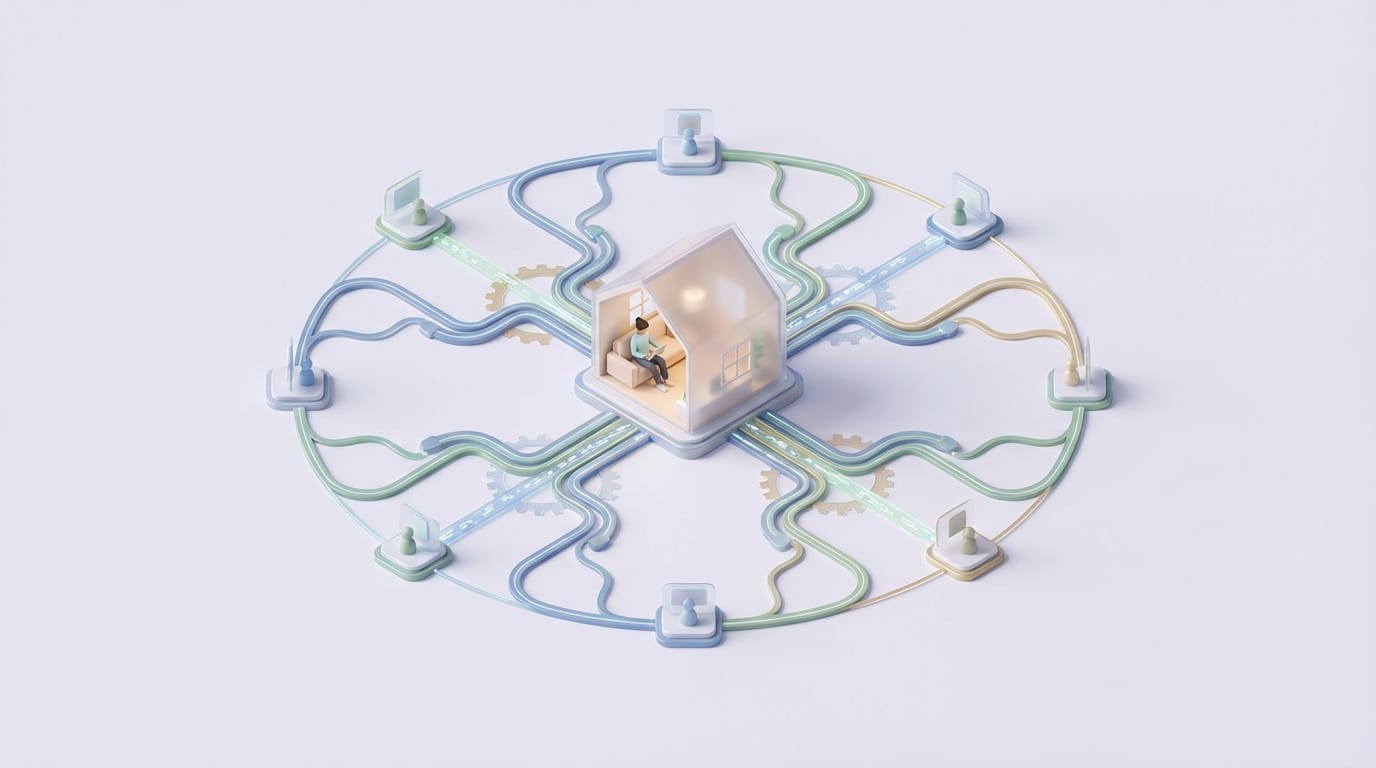
Most social platforms thrive by keeping people behind a screen, but a new generation of apps for social well-being pushes users back into the physical world. This shift addresses the growing loneliness epidemic by treating digital tools as a support for real human contact rather than a final destination for our attention. In 2026, the success of these tools depends on the strength of the bonds they create offline instead of the hours spent scrolling through a feed. Understanding how these systems work requires us to look past the buttons and icons to see the logic of social facilitation. While old networks profit when users stay reachable but lonely, these new platforms use technology to break down the barriers that stop people from meeting in person.
The move from technology that replaces social life to technology that helps build it marks a major change in how we build software. Instead of creating endless feeds that keep eyes glued to the glass, developers now focus on tools that make it easier to coordinate with others. This approach treats technology as a temporary support that helps users find the social confidence they need to function without a device. By removing the friction of planning, these apps help people rediscover the joy of shared physical space.
The Evolution of Digital Connection Strategies
Moving Beyond Passive Social Consumption
The early years of social media relied on the evolution of online video and discovery tools that put engagement above health. In those older systems, the user acts as a spectator of other people’s lives, which often leads to self-doubt and a feeling of being left out. Passive consumption creates a loop where the more a person watches others, the more they feel disconnected from their own local community. This cycle turns the act of “staying connected” into a source of stress rather than a source of comfort.
Modern apps for social well-being break this cycle by turning the user from a spectator into a participant. This change requires a total rethink of the “feed” mechanic. Instead of a stream of content to watch, the screen becomes a list of opportunities to act. The goal is to move the user through the app as quickly as possible so they can reach a physical location or a live event. This is a massive change from the time-spent metrics that have ruled the tech industry for decades, as it prioritizes the quality of the encounter over the quantity of the clicks.
The Cost of Treating Digital Feeds as Social Substitutes
When people use digital feeds as a substitute for real meetings, the biological systems that help humans bond do not get enough stimulation. Real connection depends on many senses, including the tone of a voice, body language, and being in the same room. Text and photos provide only a small part of this data, which leaves the brain feeling hungry for more even when a person gets many notifications. This “social hunger” is a primary driver of the mental health challenges we see today.
The rising demand for better social technology shows that people realize digital talk cannot replace being close to others. We are seeing a market correction where users look for tools that exist only to help them meet up in the real world. These systems prioritize local neighbors and shared hobbies over global reach. By focusing on the people who live nearby, these apps help turn online friends back into actual neighbors who can support each other in daily life.
Designing Technology as a Social Scaffold
Shifting from Destination to Facilitator
The best apps for social well-being work like a scaffold in a construction project. A scaffold is a temporary frame that supports workers while they build or repair a structure. Once the building is strong enough to stand on its own, the crew removes the scaffold. Social apps should work the same way by providing the prompts, timing, and logistics that help a user build a social life. The technology handles the boring details so the user can focus on the human side of the interaction.
This design assumes that most people are not naturally anti-social. Instead, they are often overwhelmed by the logistics of planning or feel a bit rusty after spending too much time alone. By handling the “where” and “when,” the app takes away the mental load of organizing a group. When the software makes it easy to meet, the barrier for a lonely person to join in drops. An app succeeds as a facilitator if the group of friends eventually becomes so close that they no longer need the app to stay in touch.
Building Social Confidence Through Digital Coaching
To help bridge the gap for those who feel isolated, platforms are evaluating practical AI integration to serve as social coaches. For someone with high anxiety, jumping from total isolation into a large dinner party is a huge leap. Effective apps suggest small steps that build confidence over time. A user might start by joining a small chat about a hobby before the app prompts them to join a local walking group or a book club.
This method treats social health as a skill that gets better with practice. AI agents can suggest icebreakers or topics to talk about based on what the group has in common. This acts as a lubricant that eases the initial awkwardness of meeting strangers for the first time. The goal is not to replace human feelings but to provide a safety net for people who have been out of the social loop for a long time. These small digital nudges lead to big real-world changes in how people feel about their community.
Core Features of Modern Apps for Social Well-being
Gamifying Real-World Social Exposure
While some games try to trap users in digital loops, social health tools use game mechanics to encourage movement. By balancing game design difficulty, developers create quests that reward users for visiting a library, a park, or a local workshop. These rewards are often more than just digital badges; they can include discounts at coffee shops or community centers where the meetings take place. This makes the act of going out feel like an achievement rather than a chore.
Tools like Meetup or Bumble For Friends use these mechanics to lower the fear of being rejected. When a person is busy “completing a task,” they focus less on the fear of what others might think of them. This small shift in focus is often enough to help an isolated person take that first step toward making a new friend. By turning social growth into a series of small wins, these apps make the process of making friends feel fun and manageable.
Logistical Automation for In-Person Gatherings
Planning fatigue is a major reason why people stay home. In a world where everyone is busy, finding a time when several people are free is often too hard to manage. Modern apps for social well-being connect to calendars and location services to suggest the best meeting times and nearby places that everyone will like. This automation acts like a personal secretary for a person’s social life, making sure that plans actually happen.
Apps like Geneva or Amity allow small groups to organize around specific interests like woodworking or local history. By narrowing the focus to a specific topic, these apps create a stronger sense of belonging than large social networks. When the software handles the friction of coordinating calendars, people can spend more time enjoying each other’s company and less time arguing about where to eat or when to meet. This efficiency is what allows busy adults to maintain meaningful friendships over time.
Measuring Success Through Quality of Life Metrics
Defining Success by Reduced Screen Time
For most social networks, a user spending less time on the app is a failure. For a social well-being app, it is a sign of success. This creates a strange situation in the modern economy because developers must build a product that encourages people to stop using it. To survive, these companies move away from selling ads and toward subscription models or partnerships with local businesses that want more foot traffic. They win when the user leaves the app to do something in the real world.
Health professionals like these metrics because they match real-life outcomes. As seen in the future of work and our daily habits, the ability to unplug and talk to people face-to-face is a sign of mental strength. A successful app leaves the user feeling full of energy after a real talk, not drained after staring at a screen for hours. The ultimate goal is to improve the user’s life outside of the digital environment.
The Clinical Impact of Pro-Social Technology
Connecting with others is a biological need, not just a nice thing to have. Researchers link chronic loneliness to health problems as bad as smoking fifteen cigarettes a day. Because of this, doctors and therapists are starting to use “social prescriptions” that involve these apps. A therapist might tell a patient to use a specific app to practice the social skills they talked about in their session. This gives the patient a safe and controlled way to try out new behaviors.
Apps also collect data that helps researchers understand how isolation works. If an app sees that a person has turned down every invite for a month, it could send a gentle check-in or suggest professional support. With strong privacy rules, this proactive approach turns the smartphone into a tool that warns us when mental health might be declining. It allows for help to arrive before a person reaches a point of total crisis.
Ethical Considerations for Social Developers
Privacy and Safety in Social Matching
Helping people meet in person requires a high level of trust. Developers must manage location data and personal interests without putting users at risk of harassment. Managing the ethics of generative AI and data governance is a vital part of this work. If users feel the system mines their social health for profit, they will go back into isolation to protect their privacy. The algorithms that suggest who should meet must be clear, fair, and very secure.
There is also the risk of creating a “bubble.” If an app only connects a person with others who think exactly like them, it might feel good at first but it stops them from growing. Developers have a duty to build systems that encourage people to meet a diverse range of neighbors while still keeping everyone safe. A healthy community needs a mix of different people, and technology should help us find those connections rather than hiding them.
Avoiding the Commodification of Connection
We must be careful not to let social well-being become something only the rich can afford. If the best tools for finding a community cost too much money, we will see a social divide where only some people can stay connected. Making sure these apps stay open to everyone, especially the most isolated people, is a major challenge for the next several years. Connection is a basic human right, and technology should be a bridge that everyone can walk across.
The best systems work with local governments, libraries, and public parks. The app provides the map, but the community is the actual destination. As we move forward, the goal of these digital tools is to blend into the fabric of the real world so well that we eventually forget they are even there. Technology should be a servant that helps us experience the chemistry of real life without trying to replace it.
Solving the loneliness gap is not about finding a perfect piece of code. It is about using our most advanced tools to solve an ancient problem: our need to be seen and valued by another person in the same room. By focusing on helping people meet rather than replacing those meetings, these apps provide the frame we need to rebuild our social world, one real-world encounter at a time.