
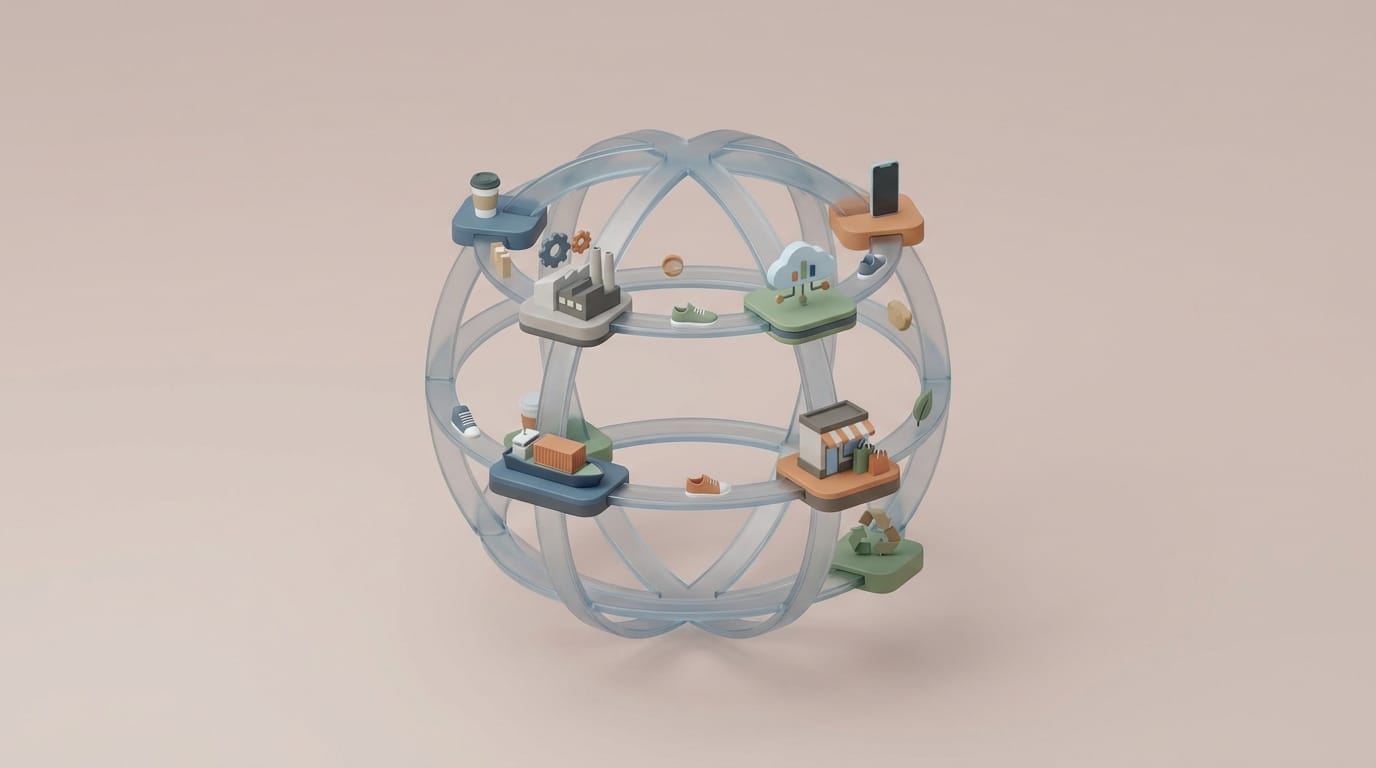
When a product travels around the world to reach you, it changes. These changes do not happen in a store. They happen in the chemistry of the item itself. To understand this, you must look at the global supply chain impact on how long your goods last. We often think of a supply chain as a simple line. We think it connects a factory to your house. In truth, it is a huge and complex system. It is built for speed and low costs. Often, these goals hurt the quality of the item. As the distance grows, the focus of the engineering changes. The goal is no longer just about how the product works for you. Instead, the goal is to make the product survive the long trip.
The Hidden Life of Modern Goods
You have to look past the brand name to see how a trip affects a product. Modern factories use a system of many different suppliers. One factory might build your phone. This is a Tier 1 supplier. But they buy the screens from a Tier 2 supplier. That supplier buys the glass and ores from a Tier 3 provider. Each step adds a new layer to the process. This makes the path from the ground to your hand very long.
Tracing the Path from Earth to Factory
The life of a product starts long before a worker cleans the factory floor. In our world, workers take raw materials from one side of the Earth. They refine them in another place. Then, they turn them into parts in a third place. Every time a part changes hands, the risk goes up. I have seen that every move or change in weather adds a hidden cost. I call this a quality debt.
Think about a piece of cotton. Workers pick it in a wet and humid place. Then, they ship it to a dry place to turn it into thread. Later, they ship it to a cool place to weave it into cloth. These moves make the fabric grow and shrink. This weakens the fibers before anyone even sews the shirt. Moving work across the world is how we make things today. But it introduces problems that are very hard to fix. Even the best quality checks cannot stop the weather from changing the materials.
What Drives Global Sourcing?
Why do we use such a complex system? Most of the time, the answer is money. Companies want to find the cheapest workers and materials. They look for areas where many suppliers live close together. Places like Shenzhen or parts of Italy are good examples. In these hubs, a factory can get parts in hours. This makes the work very fast.
However, these hubs are often thousands of miles away from you. The money saved in the factory is spent elsewhere. Companies spend it on heavy packaging. They spend it on chemicals to keep the product stable. We trade the natural quality of the item for a faster shipping network. This leads to a strange puzzle. The cheapest place to make something is often the hardest place to ship it from. I call this the durability paradox.
The Global Supply Chain Impact and Quality Drift
I am an engineer. To me, the most scary part of long-distance shipping is quality drift. This is not just a drop in value. It is a big change in how we design products. A product might spend 45 days in a shipping box. Inside that box, the heat can jump from 40 degrees to 140 degrees. This forces designers to change their goals.
Building for the Trip Instead of the User
Imagine you want to build a wood chair for your neighbor. You can use natural oils and glues. These materials breathe with the local air. But what if that chair must cross the ocean? You can no longer use those simple tools. Instead, you must use thick sealants and strong glues. You must use plastic-like materials that do not warp or bend in the sea air.
The global supply chain impact here is deep but hidden. You get a chair that looks right. But the quality inside is lower than it could be. The chair is built to survive a shaking ship. It is not built to last forty years in your house. We are buying goods made for the trip rather than the home. The journey has become more important than the destination.
Chemicals Used for the Long Haul
You can see quality drift in the chemicals we add to goods. Makers treat clothes with strong poisons to stop mold. This is vital because shipping boxes are often damp. Makers also put extra stabilizers into plastic. They do not do this to protect the plastic from your backyard sun. They do it to stop the plastic from melting in a metal box on a hot dock. These chemicals keep the product from falling apart before you even buy it.
The long journey forces us to use these chemicals. If a maker uses a natural dye, it might fail during the trip. This would cost the company too much money. So, the system picks strong and cheap plastics over high-quality natural parts. This limits your choices. You see many brands, but they all use the same tough materials to survive the boat.
How Logistics Change Your Choices
We often like the idea of buying anything from any country. This is the promise of cross-border e-commerce. But this variety is often a trick. You may see more brands, but the products are becoming the same. Global shipping rules force every brand to use the same tough parts. They must build things that can be shipped easily.
The Puzzle of Sameness
When we build things for the world, they must fit in a standard box. These are the large metal boxes you see on ships. This box size sets the size of the product. It sets the weight of the parts. It even sets how high you can stack the boxes. Everything must fit the system.
This makes products look and feel the same. It does not matter if you buy a toaster from Brand A or Brand B. Both must survive the same trip. This stops new ideas. A small shop might use old and better ways to build a toaster. But their toaster cannot survive the rough trip. They cannot compete with the giant companies. The system favors things that are sturdy and cheap.
Big Companies and Local New Ideas
The global shipping network helps those who move a lot of goods. This makes it hard for a new company to offer a better choice. If your product needs a fridge or special care, your costs will be very high. You do not just pay to make the item. You pay to build a path that does not ruin it. This is a huge wall for small businesses.
Some firms like Flexport try to fix this. They share data to help more people ship goods. But the physical truth is still there. Moving heavy items across an ocean is hard. It is a major hurdle for anyone who wants to make something better than the norm.
Damage to the Planet
We must also look at the environmental footprint of this system. We build things to survive the trip, but this hurts the Earth. The system is built to save money. It is not built to save the air or the water.
Carbon and the Many Ways We Move Goods
A product moves in many ways. It starts on a truck. It sits in a port. It moves to a ship. Then it moves to a train. Finally, a van brings it to your door. Each step lets out carbon. Ships are better than planes, but the distances are huge. This makes the total carbon cost very high.
We all want our items fast. This makes the problem worse. When a global supply chain impact makes a store run out of goods, they use planes. A plane can be 50 times worse for the air than a ship. We want things fast, so we have no time for natural quality checks. This leads to more chemicals and more heavy trash.
The Waste of Extra Packaging
Packaging is a hidden cost for the planet. Global shipping involves many machines. Forklifts and belts move your boxes. The ocean spray can get inside. Because of this, we use a lot of plastic and extra cardboard. Often, the packaging is bigger than the product itself.
This is waste. We only use it because the trip is so violent. In a local system, we could use less trash. We could even reuse the boxes. In the global model, we use it once. Then it goes into a landfill. It is the price we pay to move a fragile item a long way.
Building a Better Way to Trade
The system is not broken. But it is reaching its limit. We are starting to see a change. Companies are moving work closer to home. This is called regionalization or near-shoring. It is a way to fight quality drift.
Moving Close to Home
When a factory is close to you, the quality goes up. The trip is shorter. This means makers can use fewer chemicals. They can use less packaging. They can use better materials that might be too fragile for a boat. Moving work closer reduces the tax that shipping puts on quality.
We see this in the car and phone industries. They want to be ready for any problem. Building local networks keeps quality high. You do not have to wait 40 days for a ship. This also makes ethical sourcing easier. It is simpler to check on a factory in your own country than one on the other side of the world.
Using Computers to Track Quality
The future of quality is in tracking. Large firms like IBM and SAP use new tools. They use sensors to watch a product on its trip. They can see the heat and the moisture in real time.
Imagine you can scan a code on your shoes. You can see where they were made. You can also see if they got too hot on the ship. This forces makers to be honest. If the data shows the shoes were “cooked” in a port, the brand cannot say they are perfect. Tools like Sourcemap help companies see every supplier. This brings the hidden life of the product into the light. This is the first step toward a better system. We can finally verify quality instead of just hoping for it.
The Way Forward
The global supply chain impact on quality is a choice we made. We chose low prices and many options. But now we see the cost. We see the damage to our goods and our planet. People are starting to change their minds.
We do not need to stop all trade. We just need to find a balance. You can make better choices as a buyer. Look for items that did not have to survive a violent trip. A shorter journey usually means a better product. In a world with few resources, things that last are the best choice. Quality is not just a brand name. Quality is the story of how an item reached your door.