The Truth About Athletic Recovery Science and Performance
Athletes spend thousands of dollars on new tools. They often ignore the one process that does most of the work. Sleep handles over 90 percent of your growth. You must learn the basics of athletic recovery science to see the truth. This knowledge helps you choose between expensive hype and real results. You want to focus on the systems that actually drive your progress.
The Way Your Body Repairs Itself
Think of your training as a type of stress. You do not get stronger while you lift weights. You do not get faster while you run. You are actually breaking your body down during a workout. Strength and speed happen later. Your body repairs the damage while you rest. It wants to handle the next stressor with more ease. This is the core of athletic recovery science.
Muscle Growth and Protein Setup
Hard training causes tiny tears in your muscles. These are small breaks in your proteins. Your body fixes these tears through a special process. It makes new proteins to fix and build your fibers. This task takes a lot of energy. Your body needs raw materials like amino acids to do this. It also needs the right hormones to work well.
This repair cycle does not happen all the time. It is strongest when you rest. Your body does its best work when you use little energy. If you are busy or stressed, repair slows down. If you eat a huge meal late at night, your body focuses on food. It stops focusing on your muscles. Your system must choose where to send its help.
The Switch That Controls Healing
The Autonomic Nervous System acts like a master switch. It has two main modes. The first mode is “fight or flight.” This mode helps you train hard. It raises your heart rate and your stress hormones. The second mode is “rest and digest.” This is the mode that fixes your body.
True healing only happens in the rest mode. Some athletes stay in the stress mode too long. They drink too much coffee or do not sleep enough. The repair crew never gets the signal to start. You might feel “wired but tired” in this state. Your body is beat. But the switch for recovery is stuck in the wrong spot.
Sleep Is the Boss of Recovery
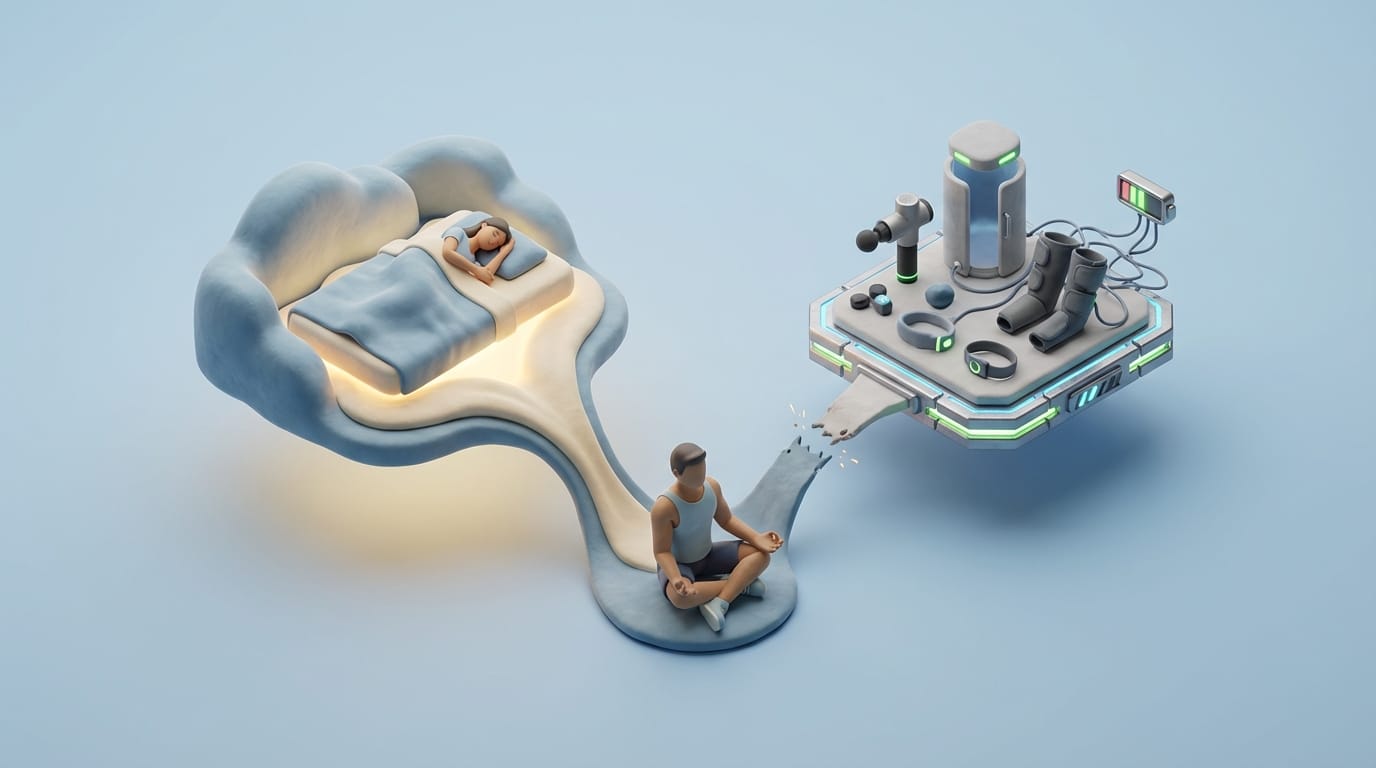
Think of recovery as a big company. Sleep is the main office where the boss makes every choice. Massage and ice baths are just small branch offices. If the main office is closed, the branches cannot help. Without sleep, your other tools have no value.
Hormones and Deep Sleep
The best time for repair is Stage 3 sleep. People call this deep sleep. Your brain starts to release growth hormones during this time. These hormones fix your tissues. They build your bones and burn your fat. This is the most vital part of the night.
Men get 70 percent of their growth hormones during deep sleep. If you cut your sleep short, you miss this window. Lack of sleep also raises cortisol. Cortisol is a stress hormone. It breaks down your muscle. It also stops your body from storing energy for your next run. You will feel slow and weak without deep rest.
The Brain Needs Recovery Too
Recovery is not just for your legs. It is for your brain. You practice skills during the day. You might throw a ball or learn a new move. Your brain saves these skills during REM sleep. This stage helps your brain store what you learned.
Imagine a gymnast who drills a new flip for hours. The brain writes those moves into memory while she sleeps. If she misses sleep, she will not improve. Her brain has no time to finish the software update. She will not be as sharp the next day. A tired brain leads to poor performance and more injuries.
Measuring Athletic Recovery Science
In athletic recovery science, we use the 90 percent rule. This rule says that sleep and food do almost all the work. Hydration is also a huge factor. All the gadgets and pills on the market only offer 10 percent of the gain. Focus on the big things first.
The Truth About Ice Baths and Boots
Tools like compression boots are very popular. Ice baths are also a big trend. These tools change how you feel right away. They can make your legs feel less sore. This has some value for your mind. But the science for these tools is quite weak.
Ice baths can even slow down your growth. Cold water stops inflammation. Your body uses inflammation as a signal. It tells your brain to start the repair process. If you stop that signal, you might feel better. But your muscles may not get as strong as they could. You are trading long-term gains for short-term comfort.
Feeling Rested vs. Being Rested
There is a gap between how you feel and how you are. You can drink coffee to feel ready. But your nerves may still be tired. Tools often help you “feel” better. Sleep ensures your heart and lungs are “actually” better. An athlete who sleeps six hours but uses a $5,000 tool is making a mistake. It is like buying a fast car but having no fuel in the tank.
The Paradox of Tracking Your Rest
Today is January 13, 2026. We have more data than ever before. You might use a Whoop or an Oura ring. You might track your stats on a Garmin watch. These tools help you see trends. But they can also cause a new kind of stress. We call this the tracking paradox.
When Your Watch Causes Stress
The tracking paradox happens when the tool stops you from resting. Some people worry too much about their sleep score. They wake up and feel great. Then they see a bad score on their app. Suddenly they feel tired and stressed. Their mood drops because of a number on a screen.
The device was made to help you rest. Instead, it triggered your stress mode. The data becomes a source of fear. This is the observer effect. The act of measuring your rest can change your rest. You must not let the tool control your mind.
Learning to Use Your Own Senses
The best way to use an Apple Watch is to train your own gut. Maybe your watch shows a bad score after a late meal. The value is not in the score itself. The value is in the lesson you learned. Late meals hurt your sleep and your recovery. Use the data to change your habits.
Soon you will know your score before you look at it. You should build a strong sense of your own body. If you only follow a tool, you are not listening to yourself. You are listening to a computer guess. A sensor uses light to guess how you feel. You know your body better than a machine does.
Planning Your Rest Cycles
In athletic recovery science, we look at two types of rest. Active recovery means doing light work. You might take a walk or swim slowly. This moves your blood without adding stress. Passive rest means doing nothing at all. Both have a place in your plan.
Why You Need Total Rest
Passive rest is very hard for some athletes. It feels like you are being lazy. But your nerves need this time to reset. Your brain sends signals to your muscles. If you are tired, those signals get weak. No foam roller can fix a tired brain. You only need time and quiet to fix your nervous system.
When you take a day off, you are not losing ground. You are letting the signal get strong again. This makes your next workout more effective. You will have more power when your nerves are fresh.
The Power of the Deload Week
A deload week is a planned break. You work out with less weight and less intensity. This stops you from getting sick or hurt. If you never stop, your stress system will fail. We call this overtraining. It leads to bad moods and zero gains.
Think of a deload like fixing a machine. You take it offline for a few days to check the parts. This is better than waiting for the machine to break. A deload lets your body finish old repairs. It catches up on all the work it missed during your hard weeks.
How to Build Your Own Recovery Plan
You do not need a lab to recover well. You just need to follow a simple path. Start at the bottom of the list. If you do not do the first things, the last things will not help you.
Create the Best Sleep Space
To get the best sleep, you must control your room. You should manage light, heat, and time.
- Light: Screen light stops your body from resting. Use dark curtains. Put your phone away 60 minutes before bed.
- Heat: Your body needs to cool down to sleep. Keep your room cool. Aim for 60 to 67 degrees.
- Time: Your body likes a routine. Go to bed at the same time every night. Wake up at the same time even on weekends.
The Recovery Order of Importance
When you have little time or money, follow this order:
- Sleep Time: Get 8 to 9 hours if you train hard.
- Food: Eat enough calories to fix your tissue.
- Water: Drink enough so your blood can carry nutrients.
- Rest Days: Take full days off from the gym.
- Specific Tools: Use massage or stretching for sore spots.
You may want to buy a new gadget. First, ask yourself if you slept eight hours for a full week. If the answer is no, you do not need a tool. You need a pillow. The best tool in athletic recovery science is free. It is built into your body and is ready every night.