
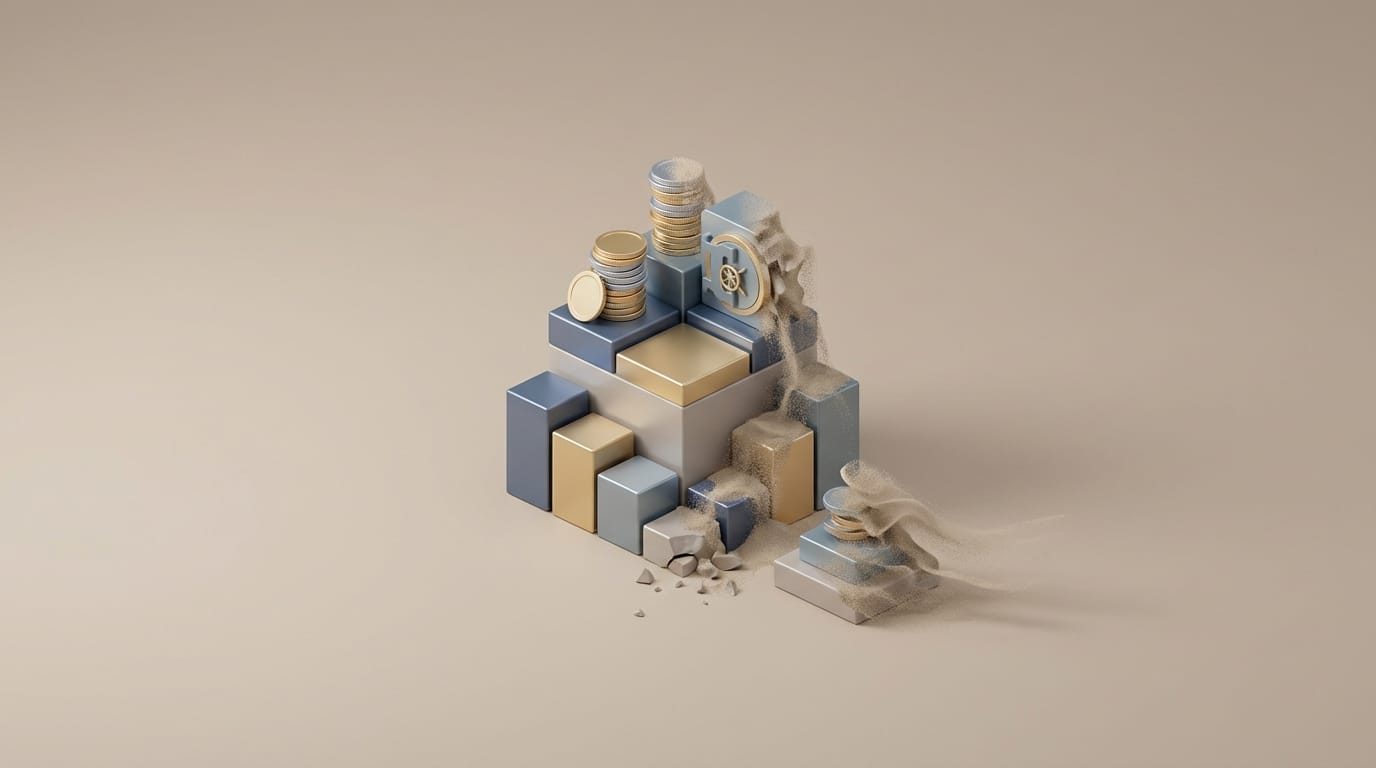
The Impact of Inflation on Savings
Many people see cash as a safe way to store wealth. They often miss how rising prices slowly eat away at their money. You must understand the impact of inflation on savings to protect your future. Money is not a fixed unit. It is a fluid way to show what you can buy. When prices go up, the numbers in your bank account stay the same. However, that money buys fewer goods and services than it did before.
Why Money Loses Value
You must look at how the economy works to see why money loses value. Prices do not just go up by accident. Specific pressures in the system of supply and demand cause these shifts. Experts put these pressures into two groups. These are demand-pull and cost-push inflation.
Demand and Cost Pressures
Demand-pull inflation happens when people want to buy more than companies can make. You can think of it as too much money chasing too few goods. This happens when people have extra cash or can get cheap loans. They bid up prices to get what they want. You often see this when the economy grows fast or when central banks add money to the system.
Cost-push inflation starts on the supply side. This happens when it costs more to make things. Prices for raw materials, fuel, or labor go up. Businesses must make a profit to stay open. They pass these higher costs to you. For example, a spike in oil prices makes it cost more to ship products. Retail prices go up for almost everything even if you do not want to buy more.
Tracking Prices with the CPI
Experts use the Consumer Price Index (CPI) to track these changes. Groups like the Bureau of Labor Statistics create this index. The CPI tracks price changes for a group of common goods. This list includes milk, gas, rent, and doctor visits.
The CPI is a vital tool for the economy. It shows the experience of a typical person living in a city. The government uses this index to change Social Security payments. It also uses it to set money policy. You should know that it is a lagging indicator. It tells you what already happened in the market over the last month or year.
Measuring the Impact of Inflation on Savings
The biggest danger to your long-term plan is confusing face value with real value. Face value is the number on your bill or in your bank app. Real value is what that money can actually buy. You must adjust for the impact of inflation on savings to see the real value.
Imagine you put $10,000 in a safe for ten years. The face value stays at $10,000. But what if prices go up by 3% each year for that decade? The real value of your money drops. In ten years, that same $10,000 will only buy what $7,400 buys today. You did not lose money in terms of numbers. However, your wealth can buy 26% less than it could before.
How Price Rises Grow Over Time
Inflation grows over time just like interest. A 2% or 3% rise might seem small today. But the effect over 20 years is very large. If prices go up 3% every year, they will double about every 24 years. This means a retirement fund meant to last 30 years could lose half its power. This can happen before the person even reaches the end of their retirement.
This decay is why holding only cash is risky. It might look safe, but your wealth shrinks. In a time of high inflation, your real interest rate often becomes negative. This is your bank interest minus the inflation rate. If your bank pays 1% interest but prices go up 5%, you lose 4% of your buying power every year.
The Gap Between Wages and Prices
Many people miss the gap between wages and prices. You might feel happy if you get a 3% raise at work. But if the inflation rate is 5% that year, you actually got a pay cut. Your buying power went down by 2%. The numbers on your check grew, but your real wealth shrank.
This creates a mental trap. People feel richer because the numbers on their paycheck are bigger. This feeling can lead to more spending. It might also make you wait too long to change your investment plan. Your economic standing gets worse even as you feel better. To keep your lifestyle the same, your pay must grow faster than prices and taxes.
How to Track Your Real Income
You must find your real income growth to see your true progress. Take the percentage your pay went up. Subtract the percentage that the cost of living went up. If the result is zero, you are just staying in the same place. If the result is negative, your work is worth less in the current market. This is true no matter what your job title says.
How to Check Your Own Costs
You can lower the impact of inflation on savings by looking at your own life. The national CPI might not fit your budget. The average index includes many things you might not buy. For example, you might own your home with a fixed mortgage. This means you do not have to worry about rising rents. Rent makes up about one-third of the national index.
But you might drive a long way in a car that uses a lot of gas. This makes you more sensitive to fuel prices than the average person. You must check your own costs against the price index to know your personal rate.
A Simple Way to Track Your Spending
Start by putting your spending into groups. Use groups like food, fuel, housing, and health. Compare what you spend now to what you spent one year ago. Find which groups are rising fastest for your life. Then you can change how you spend your money.
If food prices are your main problem, buy more bulk items. This can keep your personal rate lower than the national average. if power costs are the problem, you can insulate your home. This acts as a permanent shield against future price hikes. This check makes you an active manager of your own money.
Ways to Keep Your Money Safe
Standard savings accounts are for money you need right away. They are not for building wealth. Bank interest usually moves slower than the rate of price rises. This makes cash a leaky bucket for long-term storage. You must look for assets that have a link to price levels to protect your wealth.
Tools That Fight Price Rises
The government offers tools to fight this loss. Treasury Inflation-Protected Securities (TIPS) are one option. You can find them at TreasuryDirect. These are bonds where the value goes up with the CPI. When the bond ends, the government pays you the higher amount. This helps ensure the impact of inflation on savings does not hurt that part of your money.
Stocks have also worked well over long periods. Companies can often raise prices when their costs go up. This helps their earnings and stock prices stay ahead of inflation. Real estate is another good shield. Property values and rent income usually rise as the value of the dollar falls.
“Inflation is the only form of taxation that can be imposed without legislation.” — Milton Friedman
Understanding how inflation works lets you see the truth. Check your expenses and find your real wage growth. Move away from just holding cash. These steps help you protect the power of your wealth. The goal is to make sure your money can still buy the life you want in the future.
You can use tools to track market trends and how they affect you. Sites like Morningstar or FRED offer great data. They show how prices and assets have performed over time. Use these tools to build a smart plan. This turns a hard economic problem into a task you can manage.