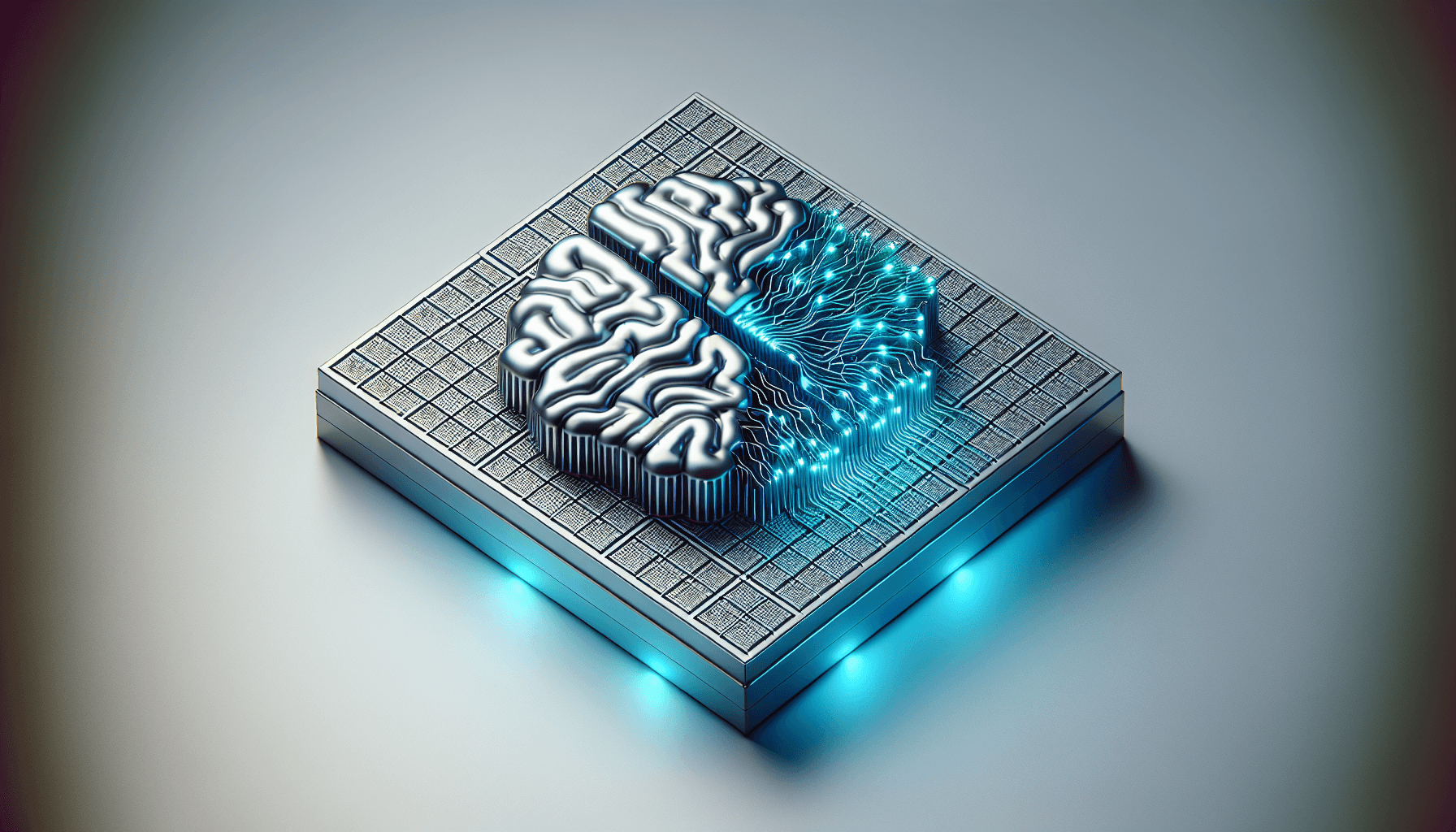
The primary barrier to widespread neuromorphic computing adoption is not the physical manufacturing of silicon neurons, but the mathematical incompatibility between traditional backpropagation and asynchronous spiking architectures. While modern hardware excels at linear algebra, the quest for brain-like efficiency requires a departure from how systems move and process data. By mimicking the biological brain’s structure, these systems aim to resolve the inherent inefficiencies of the digital age.
For decades, computing has relied on the separation of memory and processing. This architecture served sequential logic well, but it has become a primary bottleneck for artificial intelligence. To understand why the industry is shifting toward a brain-inspired approach, we must first examine the structural limitations of existing systems and the physics of data movement.
The Structural Shift from Von Neumann to Neuromorphic Design
In a traditional Von Neumann architecture, the Central Processing Unit (CPU) and the memory unit are distinct entities connected by a bus. Every time a calculation is performed, data travels from memory to the processor and back. This “Von Neumann bottleneck” consumes the majority of the energy in modern AI workloads. In many deep learning tasks, the energy cost of moving data across the chip often exceeds the energy required for the computation itself by several orders of magnitude.
Neuromorphic systems resolve this by implementing in-memory computing. In this model, processing elements and memory are colocated. By distributing memory across thousands of individual “neurons” on the chip, the system eliminates the need for a high-traffic central bus. This distributed topology mirrors the biological brain, where synapses serve as both the storage medium and the computational interface, allowing for massive data throughput without the traditional thermal and energy penalties.
Resolving the Memory-Processor Bottleneck
By placing memory directly at the site of computation, neuromorphic computing hardware minimizes the physical distance electrons travel. This represents a qualitative shift in how systems handle state. In a CPU, the state of a program is stored in RAM and swapped into registers during execution. In a neuromorphic chip, the “weight” of a synaptic connection is a physical property of the circuit itself. This allows for nearly instantaneous access and updates, as there is no waiting for data to arrive from an external memory bank.
Physical Implementation of Parallel Processing
A GPU achieves parallelism through massive arrays of identical arithmetic units executing instructions in sync, governed by a global clock. In contrast, neuromorphic cores operate asynchronously. Each silicon neuron functions independently, responding only when it receives a specific input signal. This creates a fine-grained parallel system where millions of operations occur simultaneously. Because there is no global clock coordinating every gate, the system only consumes dynamic power when and where activity occurs.
Core Hardware Components: Silicon Neurons and Synapses
To replicate the functionality of a biological brain, hardware engineers use specialized circuits that emulate the electrical behavior of neurons. These “silicon neurons” are typically implemented using complementary metal-oxide-semiconductor (CMOS) technology. The industry is increasingly focused on integrating emerging materials to improve the density of these neurons, aiming to pack billions onto a single substrate.
The hardware must capture the “integrate-and-fire” behavior of a biological neuron. The circuit accumulates incoming electrical charges, known as potentials, until a specific mathematical threshold is reached. Once triggered, the neuron emits a “spike”—a brief electrical pulse—and immediately resets its internal state. This threshold-based logic is the foundation of energy-efficient signal processing, as it filters out noise and only transmits relevant information.
Crossbar Arrays and Synaptic Weight Storage
The connections between neurons, or synapses, are often organized into crossbar arrays. A crossbar array consists of horizontal and vertical wires with a programmable resistive element at each intersection. By adjusting the resistance at these junctions, engineers can represent the “weight” or strength of a connection. When a voltage is applied to a row, the resulting current on the columns is a physical manifestation of matrix-vector multiplication. This process is governed by Ohm’s Law and Kirchhoff’s Circuit Laws, performing complex math through physics rather than iterative logic steps.
Integrating Non-Volatile Memory and Memristors
The most promising technology for synaptic storage is the memristor, or memory-resistor. Unlike traditional transistors, memristors retain their resistance state even after power is removed. This non-volatile nature allows for extremely low-power operation, as the chip does not need to constantly refresh its memory. Research institutions and companies like Intel continue to refine these materials to create chips that can learn and adapt their physical properties in real-time, effectively “wiring” the circuit as it processes new information.
Spiking Neural Networks as the Functional Paradigm
The primary software framework for this hardware is the Spiking Neural Network (SNN). In a standard Deep Neural Network (DNN), data is represented by continuous numerical values, or tensors, that flow through layers in a synchronized fashion. In contrast, neuromorphic computing relies on SNNs that use discrete “spikes” occurring at specific points in time. This is known as event-driven computation, where time is an explicit variable in the calculation.
In an event-driven system, a neuron only consumes energy when it fires a spike. If there is no input, the circuit remains idle. This leads to massive reductions in static power consumption. SNNs are therefore ideal for “always-on” sensors that must wait for a specific trigger—such as a specific audio frequency or a visual anomaly—before activating higher-level processing units.
Temporal Coding vs Rate Coding in Signal Transmission
Data encoding in these systems happens in two primary ways: rate coding and temporal coding. Rate coding represents information by the frequency of spikes over a set window of time. While simpler to implement, it often fails to capture the full efficiency benefits of the architecture because it requires high spike volumes to represent precise values.
Temporal coding uses the precise timing between spikes to encode information. A single pulse can carry significant data based on its relationship to other pulses. This temporal dimension allows neuromorphic hardware to process time-series data—like audio streams or high-speed video—more naturally than traditional frame-based architectures. Instead of taking snapshots 60 times a second, the system perceives a continuous flow of changes.
The Barrier of Algorithm-Hardware Co-dependency
Despite the physical advantages of neuromorphic hardware, a significant software gap remains. Most AI progress over the last decade has been built on backpropagation and gradient descent. These mathematical frameworks require continuous, differentiable functions to calculate how to adjust weights in a network. They rely on the ability to determine exactly how much an input change affects the final output.
Spiking neurons are non-differentiable. Because a spike is an “all-or-nothing” event, there is no smooth mathematical slope to follow for optimization. You cannot easily calculate a gradient to determine how to improve the network’s performance using standard tools. This means a model cannot simply be moved from a GPU to a neuromorphic chip without losing its efficiency. To unlock the hardware’s potential, researchers are developing native spiking learning rules that do not rely on traditional backpropagation.
Incompatibility Between Backpropagation and Spiking Hardware
When standard AI models are forced onto neuromorphic hardware, a process called “SNN conversion” is typically used. This converts a pre-trained DNN into a spiking format. While functional, this usually results in high spike rates that erase the energy efficiency benefits. This co-dependency means that until algorithms are designed specifically for the temporal, asynchronous nature of these chips, the hardware will remain underutilized for complex general-purpose AI.
The Search for Native Spiking Learning Rules
Researchers are looking at biological learning rules like Spike-Timing-Dependent Plasticity (STDP). In STDP, the strength of a connection is adjusted based on the timing of spikes between two neurons. If Neuron A consistently fires just before Neuron B, the connection is strengthened. This is a local learning rule, meaning each synapse can update itself without needing a global error signal from a central processor. This local autonomy is the key to creating chips that can learn from their environment without being connected to a data center.
Power Efficiency and Edge Intelligence Applications
The most immediate application for neuromorphic computing is at the “edge”—in devices like drones, wearables, and industrial sensors where battery life is a hard constraint. Traditional AI hardware, even specialized mobile chips, often consumes several watts of power. Neuromorphic chips, such as those developed by BrainChip, can perform pattern recognition tasks using milliwatts or microwatts, allowing for sophisticated AI in devices that previously could only handle simple logic.
Continuous Always-On Sensing in Robotics
In robotics, latency is a critical safety factor. A robot must react to a changing environment in real-time. Because neuromorphic chips process data as it arrives rather than waiting for a complete frame of video, they achieve lower “motion-to-actuation” latency. This enables more fluid movement and faster obstacle avoidance. For a robot navigating a crowded space, the ability to process visual spikes as they happen is the difference between a smooth path and a collision.
Real-Time Local Pattern Recognition
Consider a smart sensor tasked with detecting a specific vibration pattern in a factory turbine. A standard system would digitize the entire signal, send it to a processor, and run a heavy Fourier transform. A neuromorphic sensor can be tuned to the specific temporal signature of the fault. It ignores normal operation and only sends an alert when the specific sequence of spikes occurs. This “sensing-as-computing” model reduces the data load on the entire factory network.
Future Integration and Hybrid Architecture Paths
Neuromorphic chips are unlikely to entirely replace CPUs or GPUs. Instead, the industry is moving toward a heterogeneous computing model. In this scenario, a standard processor handles general logic and the user interface, a GPU handles massive parallel throughput for model training, and a neuromorphic accelerator handles real-time, low-power inference and temporal data processing. This division of labor allows each architecture to operate within its ideal efficiency range.
To reach this future, companies like IBM are working on scaling the interconnects between neuromorphic cores. While a single chip might contain a million neurons, simulating the complexity of a human brain requires billions. The challenge lies in routing signals between these neurons across multiple chips without reintroducing the bottlenecks and energy costs the architecture was designed to eliminate.
“The goal is not to build a computer that thinks like a human, but to build a computer that processes information with the same energy constraints as a human.”
The path forward for neuromorphic computing requires a dual focus. Engineers must continue to refine the memristive materials and CMOS circuits that form the physical substrate. Simultaneously, computer scientists must develop a new mathematical language for AI—one that embraces the spike, the time delay, and the local learning rule. When these two fields align, the efficiency of intelligent systems will likely transform from a limiting factor into a primary advantage for the next generation of computing.